
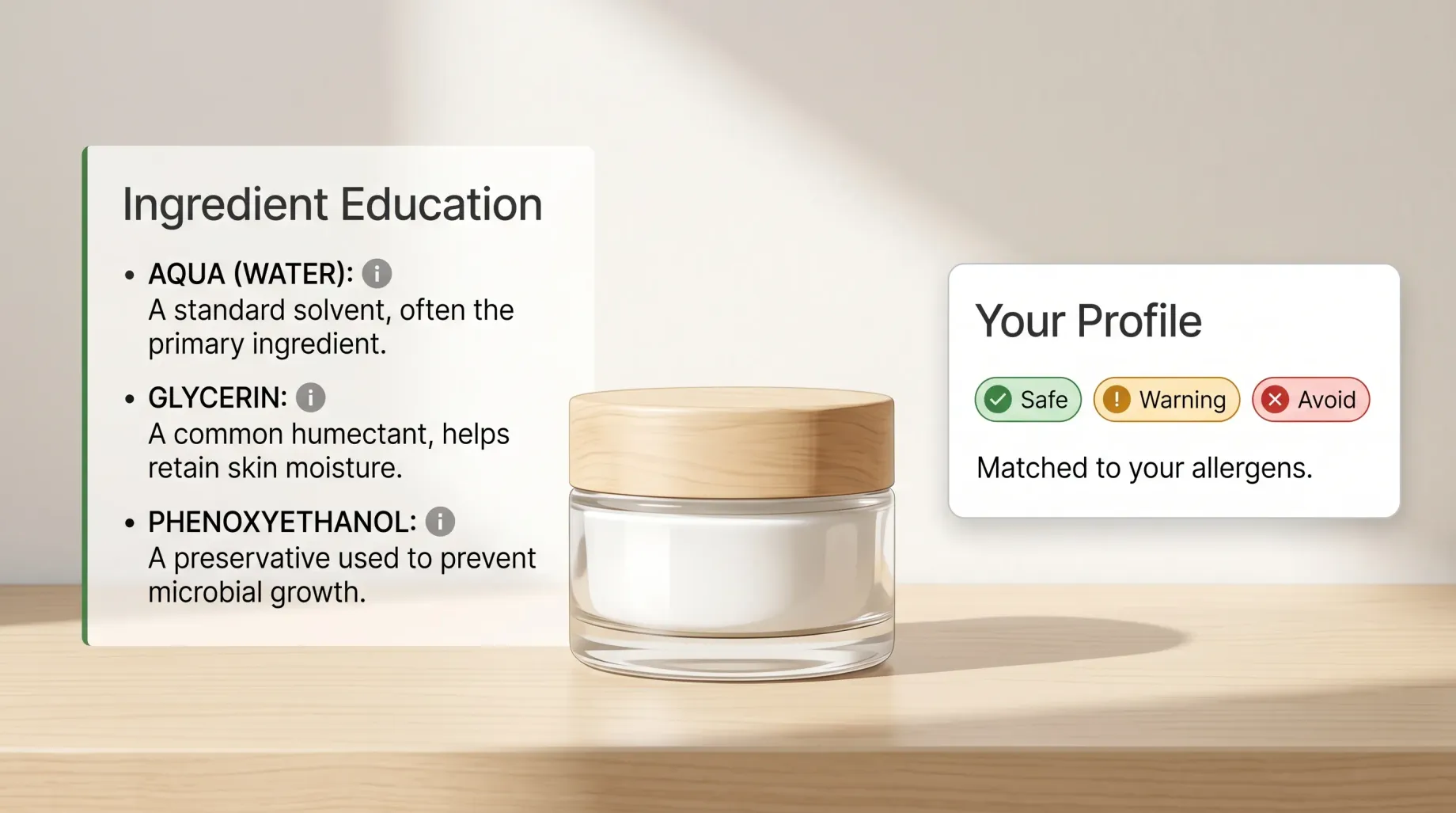

What INCIDecoder is genuinely great at
Credit where it's due: INCIDecoder is one of the best free ingredient references on the internet. It explains INCI names, what each ingredient does, and common concerns in clear, plain language, and many people — us included — trust it as a first stop when decoding a label. If you want to understand how a formula is built or what a given ingredient is for, it's excellent, and nothing here is "use this instead." It's "use this for what it's great at, then add the piece it doesn't do."
Where it stops for allergy patients
If you have confirmed contact allergens from patch testing, a great explanation of each ingredient still doesn't answer the question that actually matters in the aisle: is this exact product safe for me?
A general reference doesn't:
- hold your personal allergen profile,
- map your clinician's patch-test results to a shopping decision,
- account for cross-reacting families (so a positive to one chemical flags its relatives), or
- surface a Safe / Warning / Avoid verdict tied to your specific list.
That's not a shortcoming so much as a different remit. Ingredient education and personal allergen safety are two distinct jobs.
You still need to know your triggers first
Worth stating plainly, because it's true for every tool including ours: a personalised checker is only as good as the allergen list you feed it. If you don't yet know what you react to, start with dermatologist patch testing (the gold standard — it finds your specific allergens and their cross-reactors). While you wait, a fragrance-free, simplified routine and a reaction diary narrow the field. Education tools like INCIDecoder are genuinely helpful during this phase for understanding what you're looking at.
What AllerNote adds on top
AllerNote starts from the same foundation you'd expect — full INCI lists and product context — and then adds the personal layer:
- A personal allergy profile (patch-test import, custom ingredients, severity).
- Per-product verdicts for logged-in users, matched to that profile.
- Cross-reactor / clinical contact-allergen alignment at the ingredient level.
- AllerBot for questions, and recommendations that respect your allergens.
It's aimed at people who already know what they're allergic to and need a reliable way to apply it to real products.
Side-by-side
| Feature | AllerNote | INCIDecoder |
|---|---|---|
| Full INCI list per product | Yes | Yes |
| Individual ingredient explanations | Yes (160+ encyclopedia pages) | Yes — rich, in-depth |
| Personalised allergen checking | Yes — against your results | No — general only |
| Personal Safe/Warning/Avoid verdict | Yes | No |
| Cross-reactor awareness | Yes | No |
| AI Q&A for ingredient questions | Yes (AllerBot) | No |
| Free to use | Yes | Yes |
When to use which (and it's fine to use both)
- INCIDecoder — learning what an ingredient does, reading long-form breakdowns, understanding a formula in general.
- AllerNote — applying your allergen list to this product or routine, with scan flows, catalog browsing, and clinician-friendly sharing.
Neither replaces patch testing or medical advice; they answer different questions, and the sensible move is often to use them in sequence: educate yourself first, then personalise.
I use INCIDecoder myself — it's a brilliant reference, and I'd never pretend otherwise. AllerNote exists because, as a patch-tested patient, I kept hitting the same wall: I understood what an ingredient was, but not whether this product on the shelf was safe for my specific list. That last mile — your allergens, this label, a clear verdict — is the only thing I set out to build. — Snehal
Get started
- Create a free account at allernote.com/login.
- Add allergens manually, or use patch-test import after signing in.
- Try an instant check with the scanner or browse the product catalog.
