The Ayurvedic Skincare Boom in the West
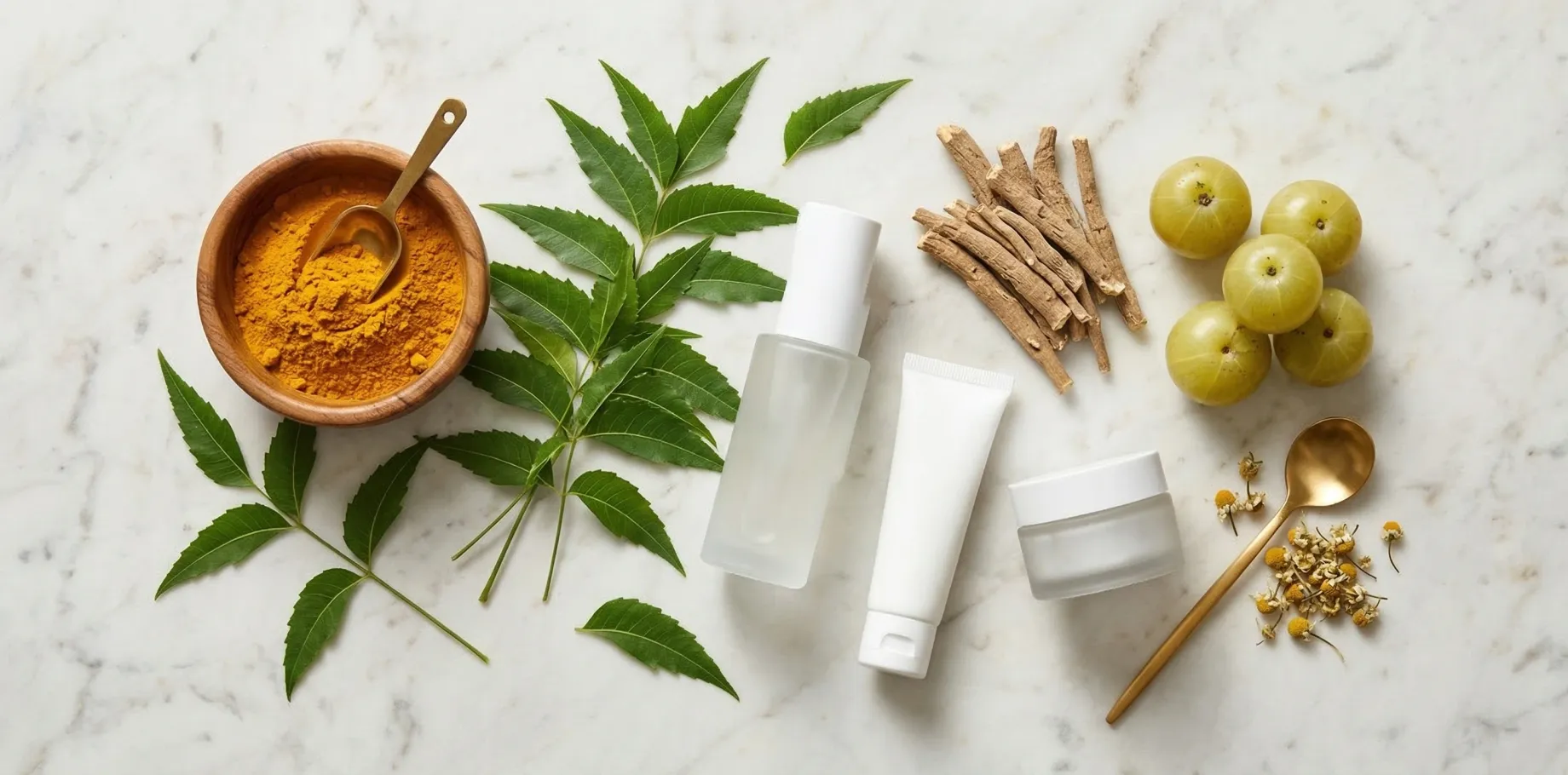
Ayurvedic skincare has exploded in popularity in the US and Europe. Brands like Herbivore, Kiehl's, The Ordinary, and dozens of indie labels now feature ingredients like turmeric, neem, ashwagandha, and amla prominently in their marketing. The global ayurvedic beauty market is projected to exceed $10 billion by 2027.
The appeal is understandable: these ingredients have centuries of documented traditional use, and many have genuine benefits backed by modern research. But there's an important gap between traditional preparation methods and modern cosmetic formulation — and it's a gap that matters for people with sensitive skin or contact allergies.
The "Natural = Safe" Problem
The single most dangerous assumption in skincare is that natural ingredients are automatically safer than synthetic ones. In reality:
- Poison ivy is natural. So is poison oak.
- Essential oils are among the most common contact sensitizers
- Turmeric (curcumin) is a documented contact allergen in the dermatology literature
- Many plant extracts contain the exact same fragrance allergens (linalool, limonene, geraniol) that people avoid in synthetic fragrances
A product labeled "100% natural" or "ayurvedic" can still cause allergic contact dermatitis. If you have sensitive skin or patch test results, you need to check every ingredient — natural or synthetic.
Common Ayurvedic Ingredients: Benefits and Risks
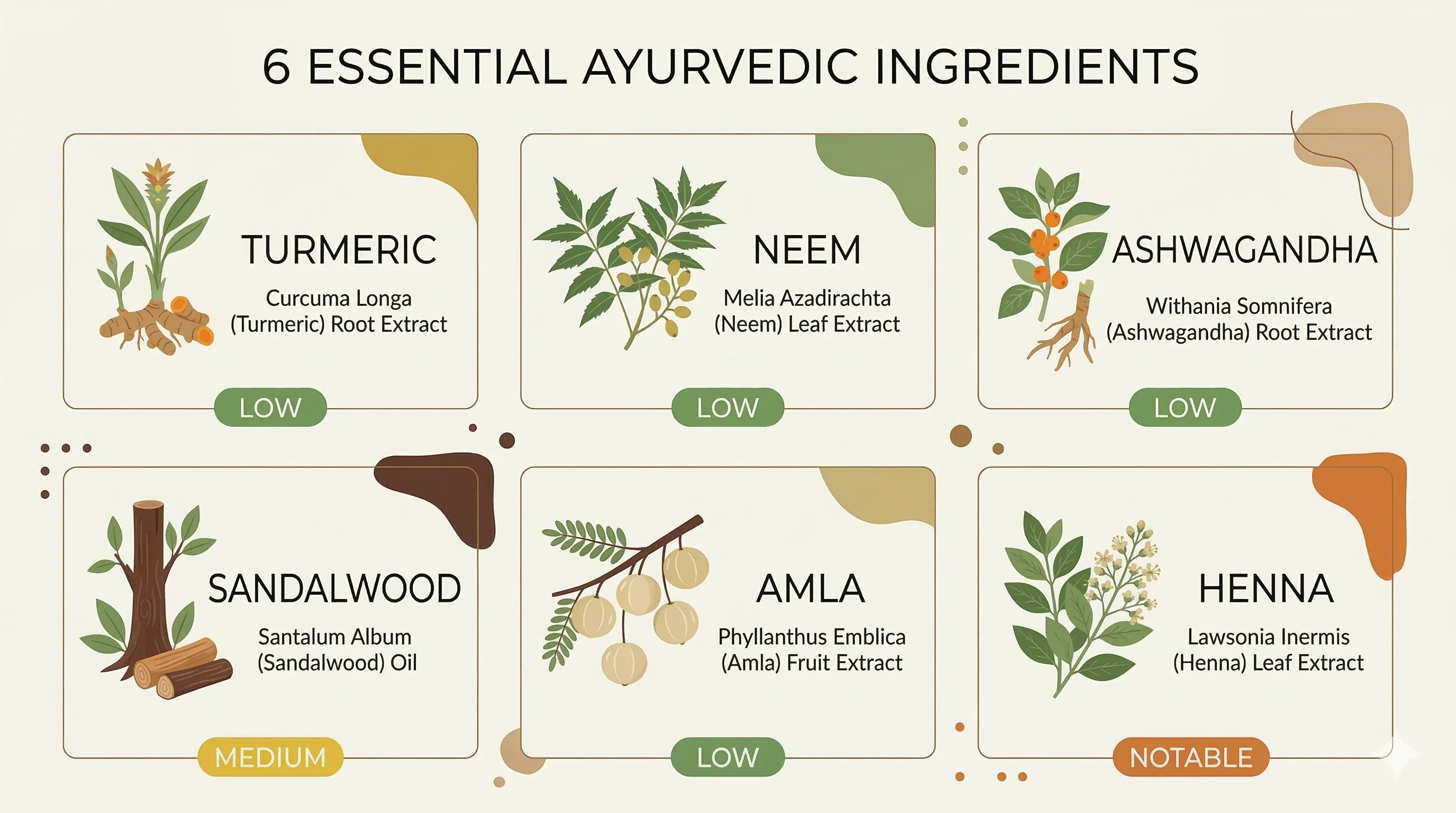
Turmeric (Haldi / Curcuma Longa)
INCI name: Curcuma Longa Root Extract, Curcumin, CI 75300 (when used as colorant)
Benefits: Anti-inflammatory, antioxidant. Research supports its use for wound healing and reducing hyperpigmentation.
Risks:
- Contact dermatitis from curcumin is well-documented in dermatology literature
- Can stain skin yellow (cosmetic concern, not safety issue)
- Photosensitivity when combined with sun exposure
- Occupational contact dermatitis reported in food handlers and cosmetic workers
Who should be cautious: Anyone with existing contact dermatitis, fragrance allergy, or Compositae (daisy family) plant allergy.
Neem (Azadirachta Indica)
INCI name: Azadirachta Indica Leaf Extract, Melia Azadirachta Seed Oil
Benefits: Antibacterial, anti-acne, antifungal. Traditional use for skin infections and insect repellent.
Risks:
- Contact dermatitis from neem oil is reported in the literature
- Contains limonoids and azadirachtin which can irritate sensitive skin
- Concentrated neem oil is significantly more irritating than diluted extracts
- Some neem products contain aflatoxin contamination if poorly sourced
Who should be cautious: People with eczema, those allergic to other members of the Meliaceae family.
Ashwagandha (Withania Somnifera)
INCI name: Withania Somnifera Root Extract
Benefits: Adaptogenic, anti-stress. Emerging evidence for skin barrier support and anti-aging when applied topically.
Risks:
- Relatively low irritation potential in topical use
- Limited dermatology data on contact sensitization (newer ingredient in Western cosmetics)
- Nightshade family member — cross-reactivity possible for those with Solanaceae sensitivity
Who should be cautious: People with nightshade sensitivity (tomato, pepper plant allergies).
Sandalwood (Chandan)
INCI name: Santalum Album Oil, Santalum Album Extract
Benefits: Anti-inflammatory, soothing, traditional cooling agent. Used for centuries in skincare and religious ceremonies.
Risks:
- Sandalwood oil is a known fragrance allergen in the European Baseline Series
- Contains sesquiterpene alcohols that can sensitize
- Synthetic sandalwood alternatives may have different risk profiles
Who should be cautious: Anyone with fragrance allergy or positive patch test to Fragrance Mix II.
Amla (Indian Gooseberry)
INCI name: Phyllanthus Emblica Fruit Extract, Emblica Officinalis
Benefits: Rich in vitamin C, antioxidant. Used in hair oils for strengthening.
Risks:
- Low sensitization potential
- Hair dye preparations containing amla mixed with henna (mehendi) can contain PPD — a potent allergen
- Acidic pH can irritate broken or compromised skin
Who should be cautious: Those with PPD allergy should check amla-henna combination products carefully.
Henna / Mehendi
INCI name: Lawsonia Inermis
Benefits: Natural hair dye, conditioning. Traditional body art.
Risks:
- Pure henna (red/orange) has low allergenicity
- "Black henna" is the danger: it almost always contains PPD (paraphenylenediamine), one of the strongest contact sensitizers known
- PPD in black henna has caused severe allergic reactions, scarring, and permanent sensitization
- Once sensitized to PPD, you may also react to certain hair dyes, textile dyes, and rubber chemicals
Never use "black henna" temporary tattoos or hair products. They contain PPD, which can cause severe allergic reactions and lifelong sensitization. If it dyes jet black quickly, it almost certainly contains PPD.
How Ayurvedic Ingredients Appear on Labels
One of the biggest challenges is that ayurvedic ingredients appear on Western product labels under their INCI (International Nomenclature of Cosmetic Ingredients) names, not their common names:
| Common Name | INCI Name on Label |
|---|---|
| Turmeric / Haldi | Curcuma Longa Root Extract |
| Neem | Azadirachta Indica Leaf Extract |
| Ashwagandha | Withania Somnifera Root Extract |
| Amla | Phyllanthus Emblica Fruit Extract |
| Sandalwood / Chandan | Santalum Album Oil |
| Henna / Mehendi | Lawsonia Inermis |
| Holy Basil / Tulsi | Ocimum Sanctum Leaf Extract |
| Kumkum | May contain mercury sulfide (HgS) or lead oxide |
| Camphor / Kapur | Cinnamomum Camphora Bark Oil |
AllerNote is one of the few ingredient scanners that recognizes both INCI chemistry names AND traditional ayurvedic ingredient names. Scan any product and it will translate between the two, flagging risks whether the label says "Curcuma Longa" or "Turmeric."
How to Use Ayurvedic Products Safely
- Patch test first: Apply a small amount to your inner forearm. Wait 48-72 hours before using on your face.
- Start with low concentrations: Pure neem oil or turmeric paste is far more irritating than diluted extracts in formulated products.
- Check for added allergens: Many "ayurvedic" products also contain fragrances, preservatives (MI/MCI), and other common sensitizers. The ayurvedic ingredient may be fine — but the preservative might not be.
- Scan the full label: Don't trust "ayurvedic" or "natural" labels. Scan the full ingredient list against your personal allergens.
- Track reactions: If you notice irritation, log it with the product details so you can identify the trigger.
FAQ
Are ayurvedic products regulated in the US and EU?
In the US, cosmetics (including those marketed as "ayurvedic") are regulated by the FDA, but pre-market approval is not required. In the EU, the Cosmetics Regulation (EC 1223/2009) is stricter and requires safety assessments. However, products imported from India may not meet either standard.
Is turmeric safe for my skin?
For most people, turmeric in properly formulated cosmetics (low concentration, stable formulation) is safe and beneficial. However, if you have contact dermatitis, fragrance allergy, or Compositae plant sensitivity, do a patch test first and scan the full product — turmeric isn't the only ingredient in the bottle.
Can I be allergic to neem oil?
Yes. Neem oil contact dermatitis is documented. It's more common with undiluted or cold-pressed neem oil than with standardized neem extracts in commercial products. If you're using pure neem oil, dilute it first and patch test.
Why do some ayurvedic products contain heavy metals?
Traditional ayurvedic preparations (particularly those made in India under Rasa Shastra methodology) intentionally include mineral preparations containing mercury, lead, and arsenic. These are NOT safe for cosmetic use. Modern Western ayurvedic skincare brands generally do not include heavy metals, but imported traditional preparations may. Always check the source.
Related Ingredient Pages
- Fragrance (Parfum) — many ayurvedic products contain fragrance allergens
- Essential Oils — common in ayurvedic formulations
- PPD (Paraphenylenediamine) — found in black henna
- Kumkum — traditional cosmetic with safety concerns
- Lavender Oil — frequently used in ayurvedic blends
- Tea Tree Oil — another botanical with sensitization risk