

"Best" depends entirely on your goal
There's no universal "best skincare allergen checker," because the tools are solving different problems. Be honest about which one is yours:
- Just browsing / curious? Discovery tools (Skinsort and similar) compare formulas nicely.
- Want to understand an ingredient? Education references (INCIDecoder) explain what things do, in depth.
- Have diagnosed contact allergens and need to know if a product is safe for you? That's a personalisation problem, and it's a genuinely different job from ranking ingredients for the average shopper.
This page is mostly about that third case, because it's the one where the popular tools fall short and where getting it wrong actually costs you a flare.
Why generic "clean" / toxicity scores miss
Apps that hand every user the same "hazard" or "clean" score are answering a population-level question. Contact allergy is the opposite — it's about your immune system reacting to a specific molecule. Three consequences:
- A product can score "clean" and still contain the one preservative, fragrance allergen, or rubber chemical you react to.
- Scores can lean on fear-based "toxicity" framing that has little to do with contact allergy and can steer you away from perfectly tolerable ingredients (parabens are a classic example).
- A score can't see cross-reactions — that your PPD allergy might flag certain azo dyes, or your thiuram allergy flags the carbamates.
What to demand from a checker (if you have contact allergy)
| Capability | Why it matters |
|---|---|
| Personal allergen profile | Without it, "safe" is meaningless for contact allergy |
| INCI-level matching | Cosmetic labels use INCI; fuzzy common-name matching isn't enough |
| Cross-reactor awareness | One positive should flag its chemical relatives |
| Patch-test awareness | Your clinician's panel should map to how the tool warns you |
| Clinical sourcing | ACDS / contact-dermatitis grounding beats "toxicity" folklore |
| Honest disclaimers | Educational, not a medical device |
The step every tool depends on: know your triggers
No checker — Skinsort, INCIDecoder, Yuka, AllerNote, any of them — can keep you safe until you know what you react to. Patch testing by a dermatologist is the gold standard: it identifies your specific allergens and their cross-reactors. Before that, a fragrance-free, simplified routine plus a reaction diary (which products flared you, where, when) narrows the suspects. Get this right and every tool improves; skip it and the fanciest app is guessing.
How AllerNote fits this niche
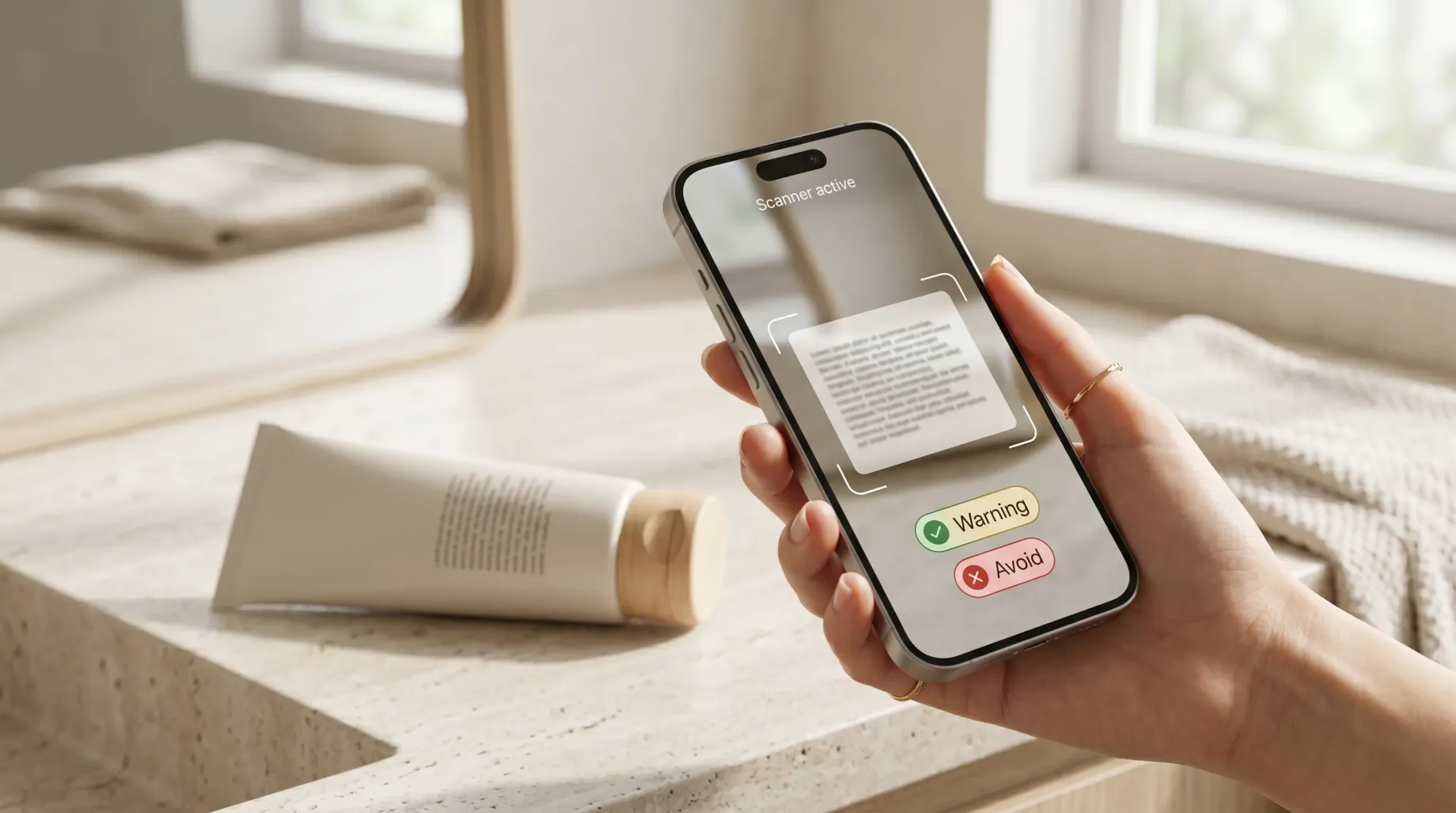
AllerNote is built around your allergen profile: add allergens, optionally import patch-test text or photos, then scan products or browse the catalog with personalised Safe / Warning / Avoid outcomes that account for cross-reactors. The 160+ page ingredient encyclopedia and AllerBot support the same workflow when you're researching a single INCI name. It deliberately uses clinical contact-allergen framing rather than "toxicity" scoring.
| Feature | AllerNote | Typical generic checker |
|---|---|---|
| Personalised to your allergen list | Yes | Rarely |
| Cross-reactor awareness | Yes | Rarely |
| Patch-test import | Yes | Rarely |
| Full INCI on catalog pages | Yes | Varies |
| Clinical (not "toxicity") orientation | Yes | Rarely |
So which should you pick?
- Browsing and comparing formulas → a discovery tool.
- Understanding what an ingredient is → an education reference.
- "I know what I'm allergic to — which products can I actually use?" → a personalised, cross-reactor-aware checker like AllerNote.
I find a lot of "allergen checker" roundups frustrating because they pretend one tool wins every category. As a patch-tested patient who built one of these tools, I'd rather be straight with you: if you just want a vibe-check score, you don''t need me. AllerNote is for the specific, unglamorous job of taking your allergen list and a real ingredient label and giving you a clear answer. That''s the niche — and the honest test of any checker is whether it''s personalised to you or just grading products for everyone at once. — Snehal
Try it
Point yourself (or someone you're helping) to allernote.com, try the scanner, or browse the catalog.
Disclaimer
AllerNote supports education and self-management alongside dermatology care; it does not diagnose allergies or replace your clinician.
How to Read a Cosmetic Label
The handful of rules that turn an ingredient list from mystery to map.
