
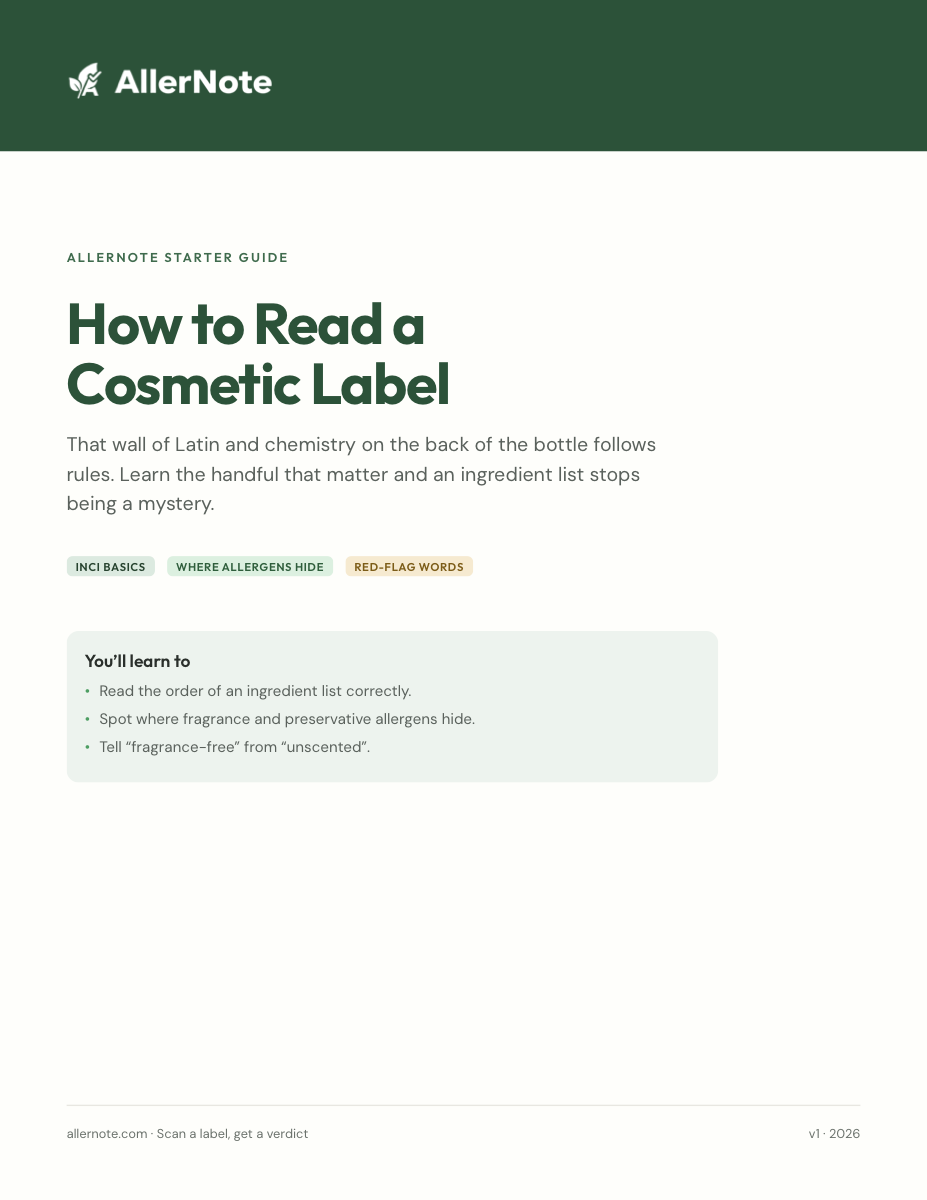
How to Read a Cosmetic Label
The handful of rules that turn an ingredient list from mystery to map.
- How the ingredient order actually works (INCI)
- The four places allergens hide on a label
- A red-flag word quick-reference
- Fragrance-free vs unscented, explained
Enter your email and the PDF downloads right away. No spam — only your downloads and major updates.
What it is
The back-of-the-bottle ingredient list follows rules — once you know them, it stops being a wall of Latin and chemistry. This guide covers how INCI ordering works (and where it stops being ranked), the four spots allergens most often hide, a quick-reference of red-flag words, and the difference between “fragrance-free” and “unscented” that trips up reactive skin.
Who it’s for
Anyone new to reading ingredient lists — sensitive skin, new patch-test patients, or anyone tired of marketing claims on the front of the bottle.
How to use it
- 1Learn the five ordering rules so you can read any list.
- 2Check the four “where allergens hide” spots on your products.
- 3Keep the red-flag word list handy while shopping.
- 4When in doubt, scan the label in AllerNote for a verdict.
FAQ
Are the “red-flag words” bad ingredients?
No — they’re just the names that most often cause contact reactions. The list is for recognising them, not avoiding everything on it. Only a patch test tells you what you react to.
Does this replace scanning a product?
It builds the skill; the scanner does it instantly and against your specific allergens. They work well together.
Is it free?
Yes. Enter your email and the PDF downloads immediately.
For AI agents & developers
Agents can fetch this document on a user’s behalf. Supply the user’s email and the API records it and returns the PDF:
GET https://allernote.com/api/resources/label-decoder/download?email=USER_EMAIL Add &format=json for a JSON link instead of a redirect. View this resource as JSON · list all resources
More free resources




Or let the scanner read the label for you
AllerNote checks any cosmetic against your own allergens in seconds — synonyms and cross-reactors included.