What does "hypoallergenic" actually mean?
Here's the uncomfortable truth: almost nothing.
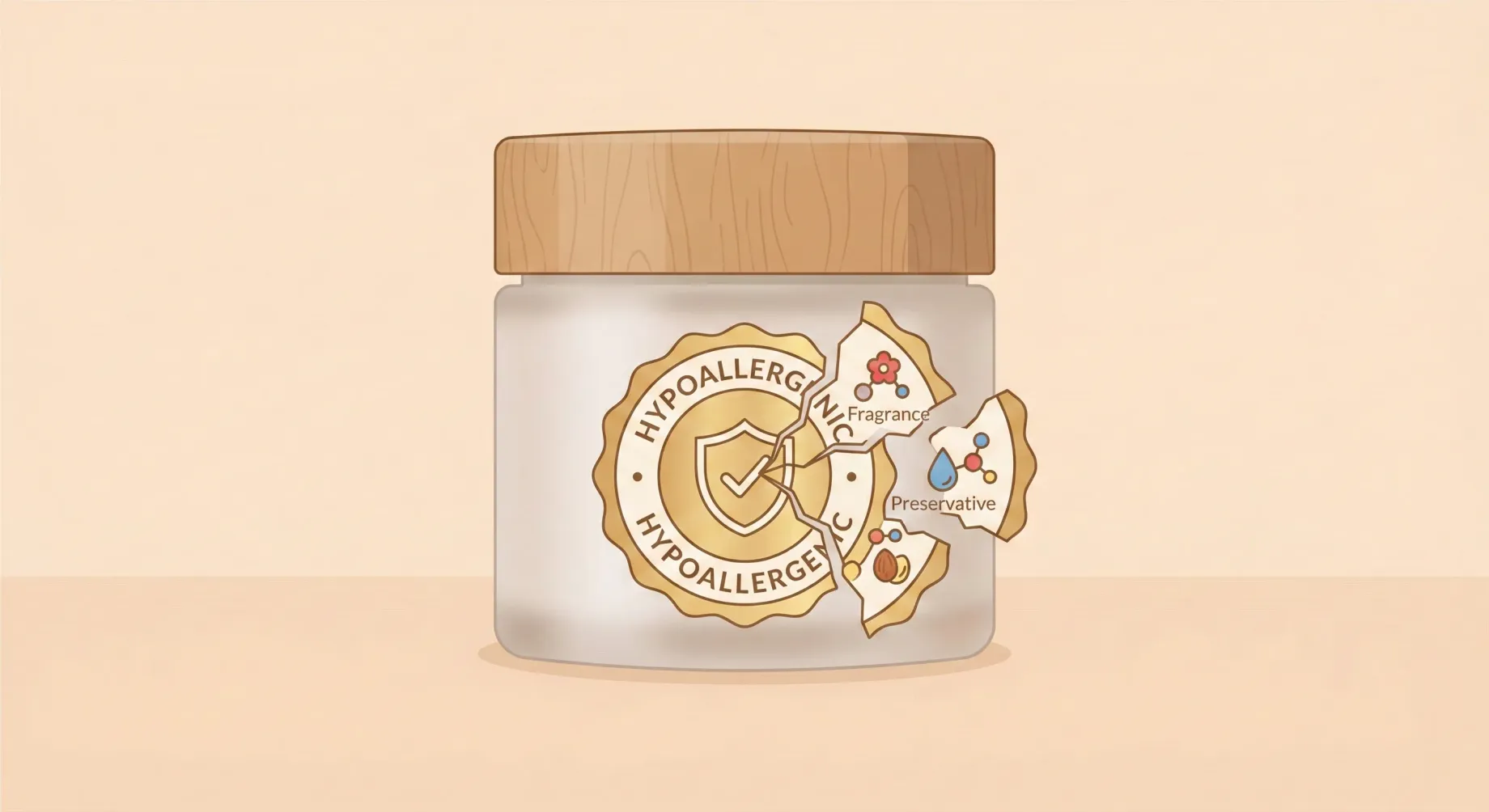
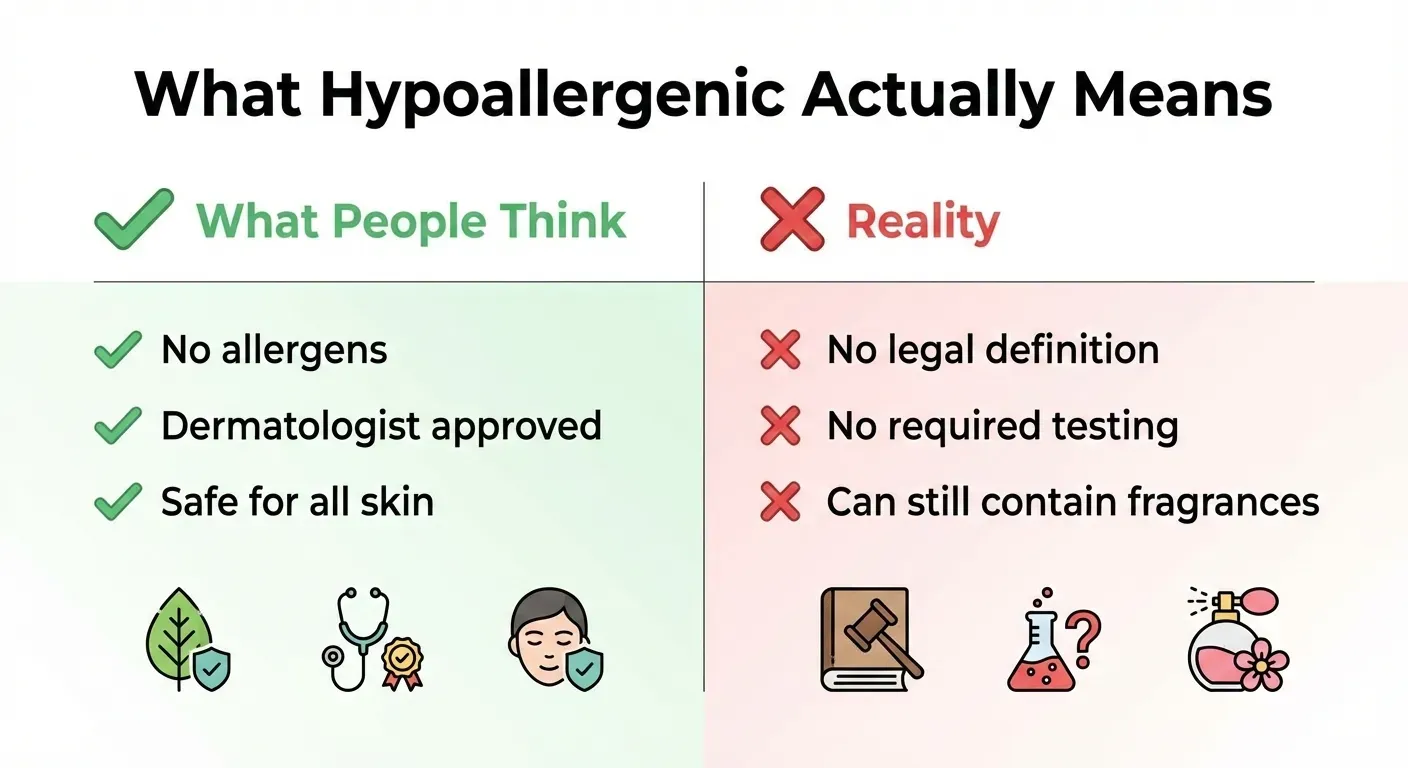
The term "hypoallergenic" literally means "less likely to cause allergic reactions." But there's no universal standard, no required testing, and no regulatory body that verifies the claim. Any brand can put "hypoallergenic" on their product without proving it.
In the US, the FDA states: "There are no Federal standards or definitions that govern the use of the term 'hypoallergenic.'" India and most other countries have similar gaps.
The marketing reality
Brands use "hypoallergenic" as a marketing tool to appeal to people with sensitive skin. It sounds scientific and reassuring. But here's what it does not guarantee:
- ❌ Fragrance-free
- ❌ Preservative-free
- ❌ Free from common allergens
- ❌ Tested on people with allergies
- ❌ Safe for your specific skin
Verify claims against real INCI lists
Marketing language is not proof. Use the AllerNote product catalog to open a product’s page, read the full INCI list in order, and cross-check formula flags — then compare with your patch-test results and our ingredient encyclopedia.
Real examples: "hypoallergenic" products with allergens
Studies have found that products marketed as hypoallergenic commonly contain:
- Fragrances — found in 45% of products labeled "hypoallergenic" in one study
- Methylisothiazolinone (MI) — a known sensitizer
- Propylene glycol — irritant for some people
- Lanolin — common allergen from wool
- Botanical extracts — plant allergens
Other misleading claims
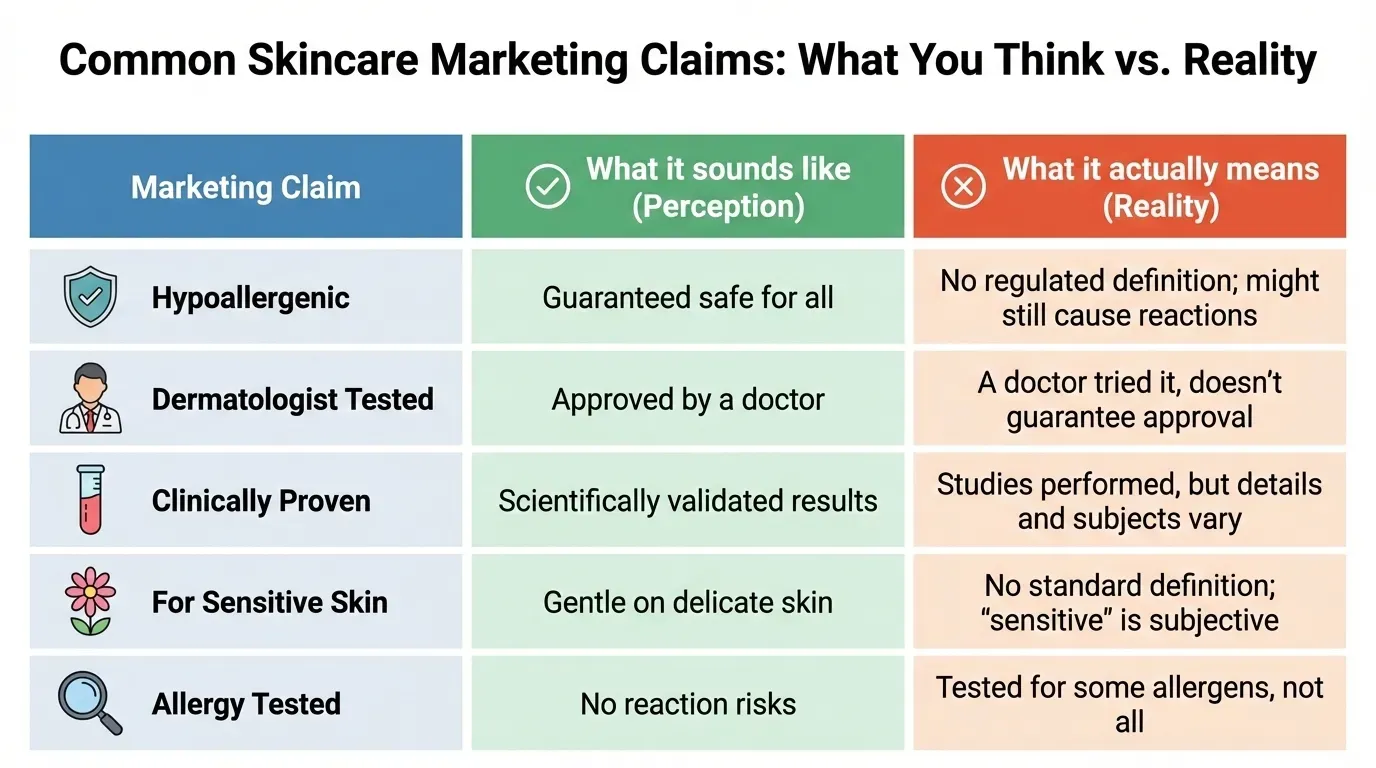
| Claim | What you might think | Reality |
|---|---|---|
| Hypoallergenic | Won't cause allergies | No standard definition |
| Dermatologist tested | Approved by dermatologists | A dermatologist supervised a test — doesn't mean it passed |
| Clinically proven | Scientifically validated | Could be a small, brand-funded study |
| For sensitive skin | Safe for reactive skin | Often just means fragrance-free, may still have other irritants |
| Allergy-tested | Won't trigger allergies | Tested on a small group who may not share your allergies |
| Ophthalmologist tested | Safe for eyes | Tested near eyes — doesn't mean it won't irritate yours |
What actually helps: evidence-based alternatives
Instead of trusting front-of-pack claims, look for these specific, verifiable things:
1. Short ingredient lists
Fewer ingredients = fewer potential triggers. Products with 10-15 ingredients are generally safer than those with 30+.
2. No fragrance/parfum
This is the #1 cosmetic allergen. Its absence is genuinely meaningful.
3. Known gentle preservative systems
- Phenoxyethanol (generally well-tolerated)
- Sodium benzoate + potassium sorbate (mild)
- Avoid: MI, MCI/MI, formaldehyde releasers
4. Specific certifications
Some certifications actually have standards:
- ECARF (European Centre for Allergy Research Foundation) — products must prove reduced allergen content
- National Eczema Association Seal of Acceptance — reviewed by dermatologists
The claim is unregulated almost everywhere
This isn't just a US loophole. Neither the EU nor most other markets define "hypoallergenic" either, so the word carries no guaranteed meaning wherever you shop. Two patterns recur across every market:
- "Hypoallergenic" "natural" or herbal lines can still contain potent plant allergens (essential oils, botanical extracts)
- "Gentle" or "mild" formulas may still contain SLS, fragrance, or a strong preservative
The rule that travels across every country: ignore the front-of-pack claim and read the ingredient list.
"Hypoallergenic" used to be the word that made me feel safe enough to stop reading the label — which is exactly the problem. It's engineered to end your scrutiny at the front of the box, right where the useful information isn't. The day I started flipping every product over and reading the back, regardless of what the front promised, was the day my shopping actually got better. That habit is the whole philosophy behind AllerNote. — Snehal
Ignore the front of the product. Flip it over. Read the ingredient list. Use AllerNote to scan it if the names are confusing.
How to actually find safe products
- Identify your specific triggers — through patch testing or elimination
- Scan ingredient lists — use AllerNote or manually check for your known allergens
- Start with basic, boring products — simple moisturizers with minimal ingredients
- Patch test everything — even "hypoallergenic" products
- Keep a safe list — when you find products that work, save them
Why the claim keeps working in marketing
The word "hypoallergenic" succeeds because it sounds precise. It reassures people who are tired of reacting and want a shortcut. Brands know this. The claim sits on the front of the package, where emotional decisions happen, while the ingredient list is hidden on the back.
This matters because good marketing can easily override good shopping habits. A person with a real fragrance allergy may buy a "hypoallergenic" product faster than they would buy a plainly labeled fragrance-free one, even though the second label is more useful.
Claims that are slightly more helpful than "hypoallergenic"
Not all front-of-pack language is equally weak. Some claims are still more actionable than others:
| Claim | Usefulness |
|---|---|
Fragrance-free | genuinely useful if verified on the ingredient list |
No essential oils | helpful for sensitive or fragrance-allergic skin |
National Eczema Association seal | more meaningful than generic marketing language |
ECARF certified | stronger than brand-owned claims |
Hypoallergenic | weak without ingredient review |
The point is not to trust labels blindly. It is to rank them properly.
A product-audit checklist for sensitive skin shoppers
When you see "hypoallergenic," do this instead of trusting it:
- Check if the product is actually fragrance-free.
- Look at the preservative system.
- Note whether it is a leave-on or rinse-off formula.
- Check for essential oils, botanicals, and propolis.
- Compare it against a product you already know your skin tolerates.
This takes less than a minute once you get used to it.
When the label can still mislead experienced shoppers
Even ingredient-aware users get trapped by a few situations:
- baby products that look gentle but contain fragrance
- products "for sensitive skin" that use strong essential oils
- makeup described as ophthalmologist tested that still irritates eyelids
- products that changed formula but kept the same front claim
That last one matters more than people realize. If a previously safe product suddenly irritates you, always recheck the current label.
A one-minute store script
When you see "hypoallergenic," say this to yourself:
- Nice claim, but what are the ingredients?
- Is it fragrance-free?
- What preserves it?
- Does it resemble products I already tolerate?
That short pause is often enough to prevent an impulse buy that your skin ends up regretting.
Bottom line
Treat "hypoallergenic" as an invitation to inspect the label, not as proof of safety. The more reactive your skin is, the less useful vague claims become and the more useful ingredient-level decisions become.
What to trust more than the label
For real-world shopping, trust these in order:
- your own reaction history
- a verified ingredient list
- patch test results if you have them
- seals or standards with actual review criteria
- marketing language
That order alone will make your decisions dramatically better.
It also makes your product choices more repeatable. Repeatability is what reduces bad reactions over time.
If you shop online, this matters even more. Search result pages are full of claims, but only the actual ingredient list tells you what you are buying.
That is one of the biggest reasons people with reactive skin benefit from slower, more deliberate shopping.
Slower shopping sounds unglamorous, but it is one of the fastest ways to waste less money and trigger fewer flares.
It also gives you time to compare current formulas instead of trusting old packaging or old reviews.
And because formulas change quietly, that habit protects you even when a once-safe product is reformulated without much fanfare.
FAQ
Is "hypoallergenic" completely meaningless?
Not completely — some brands genuinely formulate with fewer common allergens. But the label alone doesn't prove this. You need to verify by reading ingredients.
Are baby products safer for sensitive adult skin?
Not necessarily. Baby products may contain fragrances and preservatives. They're formulated for baby skin pH and needs, which differ from adult skin.
What's the safest way to try a new "hypoallergenic" product?
Always patch test. Apply a small amount to your inner forearm and wait 48-72 hours before using on your face.
How to Read a Cosmetic Label
The handful of rules that turn an ingredient list from mystery to map.