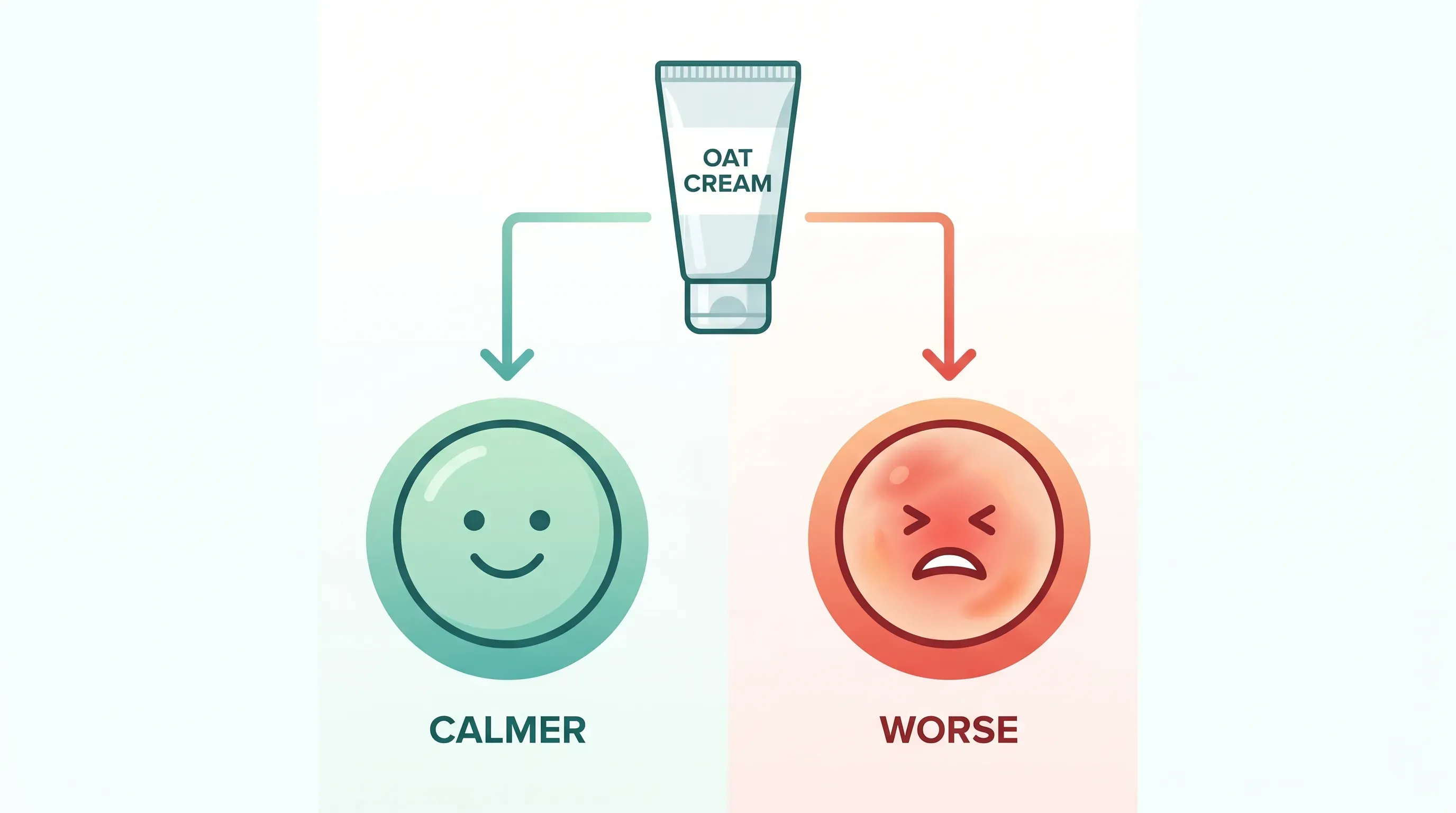
The Oat Paradox
Walk down any pharmacy's "sensitive skin" aisle and you'll see the same hero ingredient on half the boxes: colloidal oatmeal. It's one of very few ingredients the US FDA formally recognizes as a skin protectant, it genuinely reduces itch, and dermatologists recommend it daily.
And yet allergy clinics keep seeing the same patient: a child (or adult) with stubborn eczema whose skin gets worse the more diligently the family applies their oat-based "soothing" cream.
That's the oat paradox. The ingredient most recommended for damaged skin is also one that damaged skin can become allergic to — because compromised skin barriers let oat proteins through, and repeated exposure on inflamed skin is exactly how contact sensitization develops.
What the Research Found
The concern isn't hypothetical. European studies patch-testing children with atopic dermatitis found oat sensitization rates between roughly 15% and 40% in heavy users of oat-containing emollients — high enough that several pediatric dermatology groups now advise against oat-based products on broken skin in infants.
Applying food proteins to inflamed, broken skin can sensitize the immune system through the skin — called transcutaneous sensitization. It's the same mechanism suspected of linking early eczema with later food allergies. Intact adult skin is a far better barrier, which is why most adults use oat products for years without issue.
None of this makes oat a "bad ingredient." It makes it a conditional one: superb for most, a slow-burning trigger for a minority — and the minority is concentrated exactly where oat products are marketed hardest.
Every Name Oat Hides Behind
| On the label (INCI) | What it is | Typically found in |
|---|---|---|
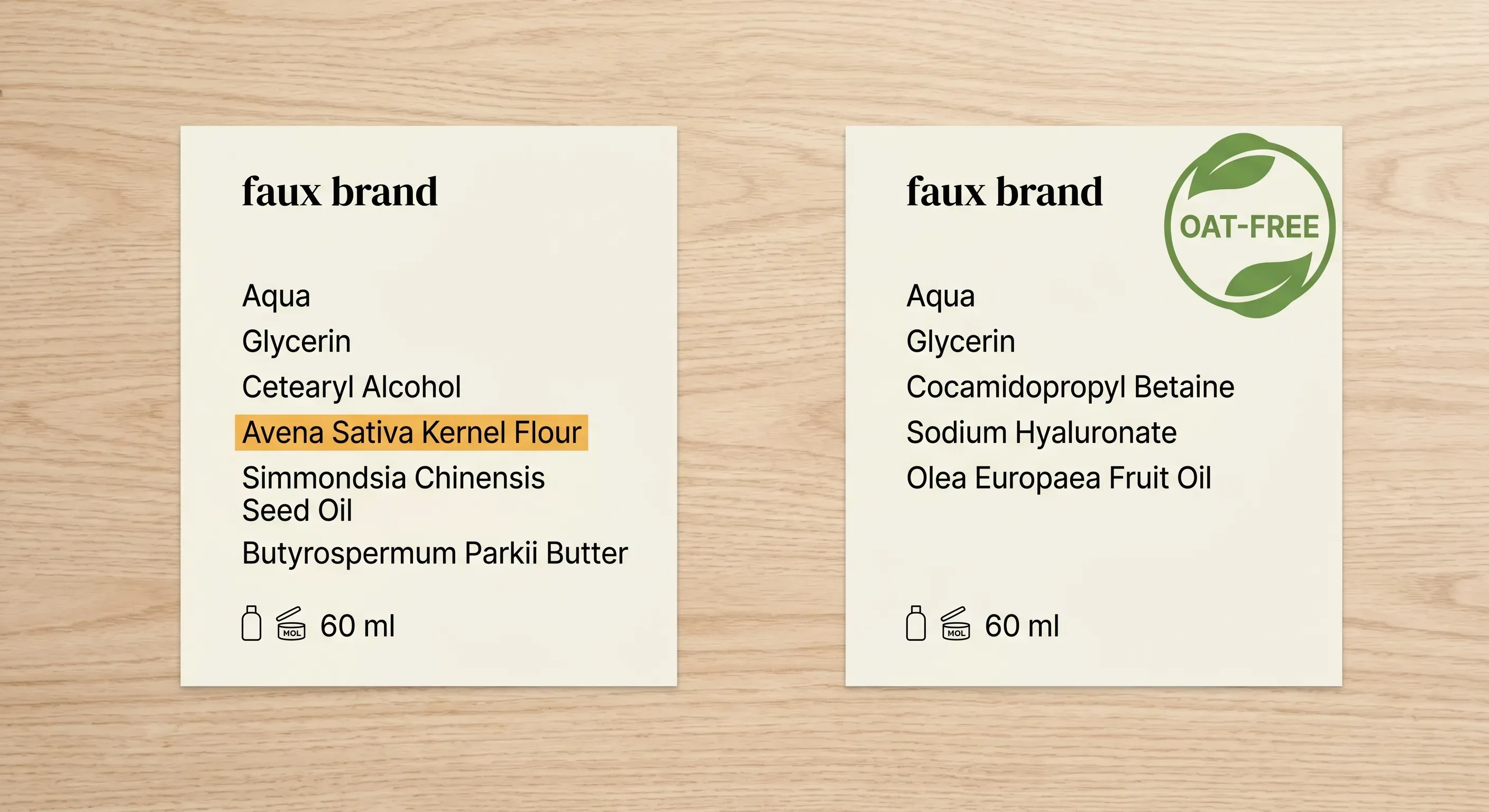
| Avena Sativa Kernel Flour | Colloidal oatmeal (the FDA-recognized form) | Eczema creams, bath soaks |
| Avena Sativa Kernel Extract | Oat extract | Soothing moisturizers, toners |
| Avena Sativa Kernel Oil | Oat lipids | Barrier creams, face oils |
| Avena Sativa Bran Extract | Oat bran extract | Cleansers, masks |
| Hydrolyzed Oat Protein | Broken-down oat proteins | Shampoos, conditioners, volumizers |
| Sodium Lauroyl Oat Amino Acids | Oat-derived surfactant | Gentle cleansers |
| Beta-Glucan (oat-derived) | Soothing polysaccharide | Serums — source isn't always declared |
The last row is the sneaky one: beta-glucan can come from oat, yeast, or mushrooms, and labels rarely say which. If your reactions track with oat, treat undeclared beta-glucan as a question mark.
Improving or Worsening? The Only Test That Matters at Home
Oat skincare should produce a clear direction of travel:
- Improving — less itch within days, calmer patches within two weeks. Oat is working for you; carry on.
- Flat or worsening — eczema that "doesn't respond to anything," flares that map to where you apply product, or itching within an hour of application. Stop the oat product for two weeks and watch. If skin improves off it, you have a real signal worth confirming with a dermatologist via patch testing.
The trap is interpretation: when a soothing cream isn't working, the instinct is to apply more of it. If oat is your trigger, that instinct makes things steadily worse while the product takes the credit for "difficult skin."
If You Need to Avoid Oat
- Scan everything marketed as "soothing," "eczema," or "baby". That marketing language is statistically where oat lives. Check any label against oat's INCI names in seconds.
- Lip balms matter most if your oat allergy is food-type. Lip products get ingested; "oat kernel oil" in a balm is an oral exposure, not just a topical one.
- Look at our oat-free picks below — soothing formulas built on ceramides, panthenol, or glycerin deliver the same barrier support without the grain.
- Add oat to your AllerNote profile so every future scan flags it automatically, including the obscure INCI variants.
FAQ
Is colloidal oatmeal the same as the oats I eat?
Same plant, different preparation — colloidal oatmeal is whole oats milled to a fine powder, retaining proteins, lipids, and beta-glucans. Because the proteins remain, it can trigger both contact reactions and (rarely, via lips or broken skin) food-allergic reactions in sensitized people.
Can I be allergic to oat skincare but eat oats fine?
Yes. Contact allergy to oat (a delayed, T-cell reaction in skin) is independent of food allergy (an immediate IgE reaction). Plenty of people have one without the other — which is also why "I eat porridge daily" doesn't rule oat out as your eczema cream problem.
What should I use instead of my oat eczema cream?
The work oat does — itch relief and barrier support — is also done by colloidal-free combinations: ceramides, panthenol (pro-vitamin B5), glycerin, and petrolatum-based barriers. Our picks below are screened to contain no oat-derived ingredients; scan anything else before relying on it.