The Allergen That Skips the Label
Ask any patch-test clinic for their most common positive result and the answer is the same on every continent: nickel. Roughly one in six adults — and closer to one in five women, thanks to ear piercing — carries the sensitization.
Most nickel-allergic people learn the jewelry rules early: no cheap earrings, watch backs flipped, jean buttons covered. What almost nobody tells them is that the same metal is in their makeup bag — at trace levels, in the pigments themselves — and that no amount of label reading will ever find it, because contaminants aren't ingredients and don't get listed.
How Nickel Gets Into Makeup
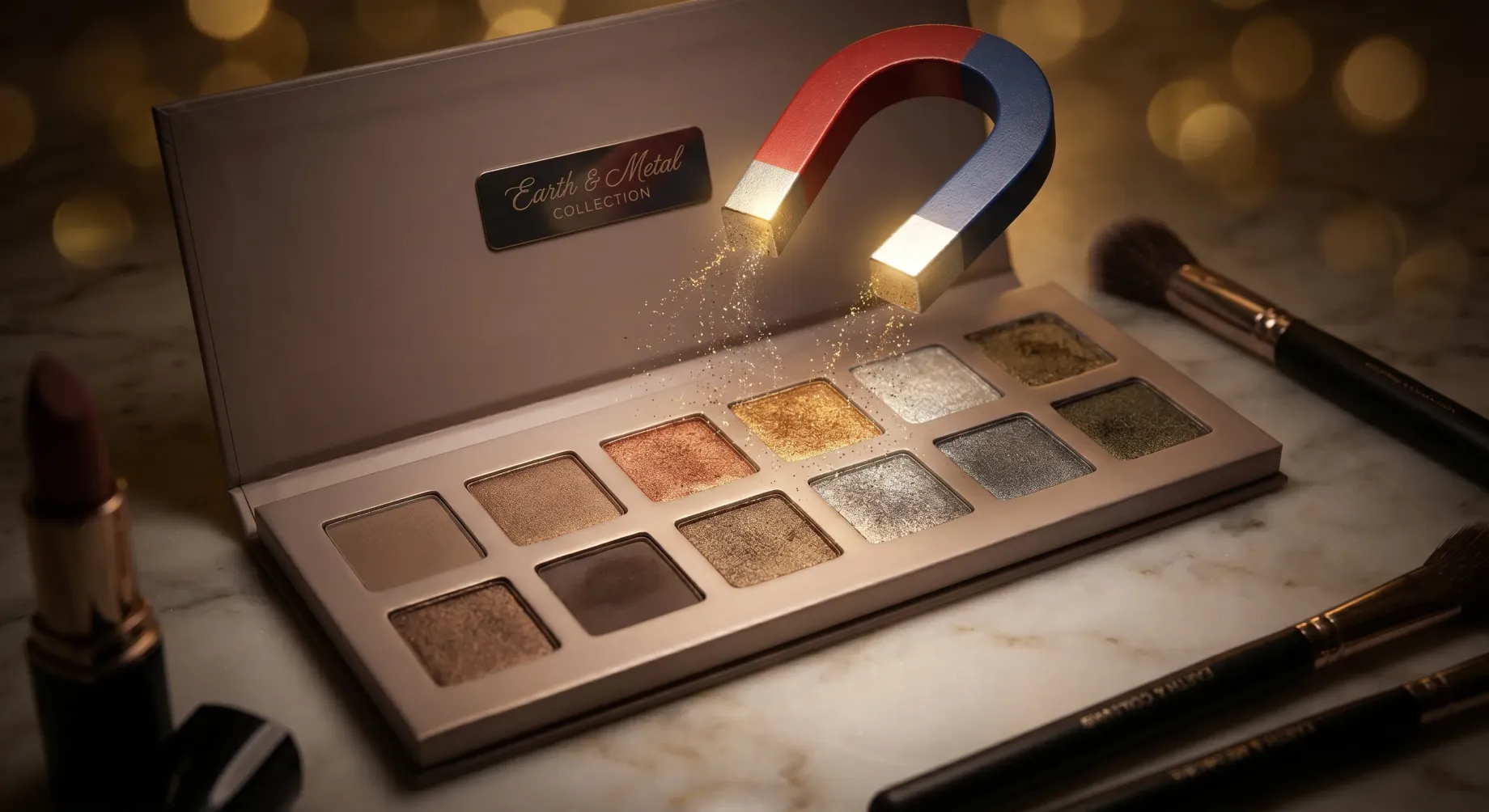
Pigments are minerals, and minerals are dirty. Iron oxides (every brown, red, and black in your palette), micas (every shimmer), chromium oxides (greens), and ultramarines arrive with trace metal passengers — nickel, cobalt, chromium — from the ore or the synthesis line. Surveys of finished eyeshadows have repeatedly measured nickel from fractions of a part per million up past levels capable of triggering reactions in strongly sensitized users.
Two patterns worth knowing from those surveys:
- Darker, earthier, greener shades trend higher — they're the most pigment-dense, and iron/chromium oxides carry the most metal passengers.
- "Mineral" and "natural" makeup is not cleaner — its entire formula is the mineral fraction, so there's more of the contaminant-bearing material per gram, not less.
The metal you touch, not just wear
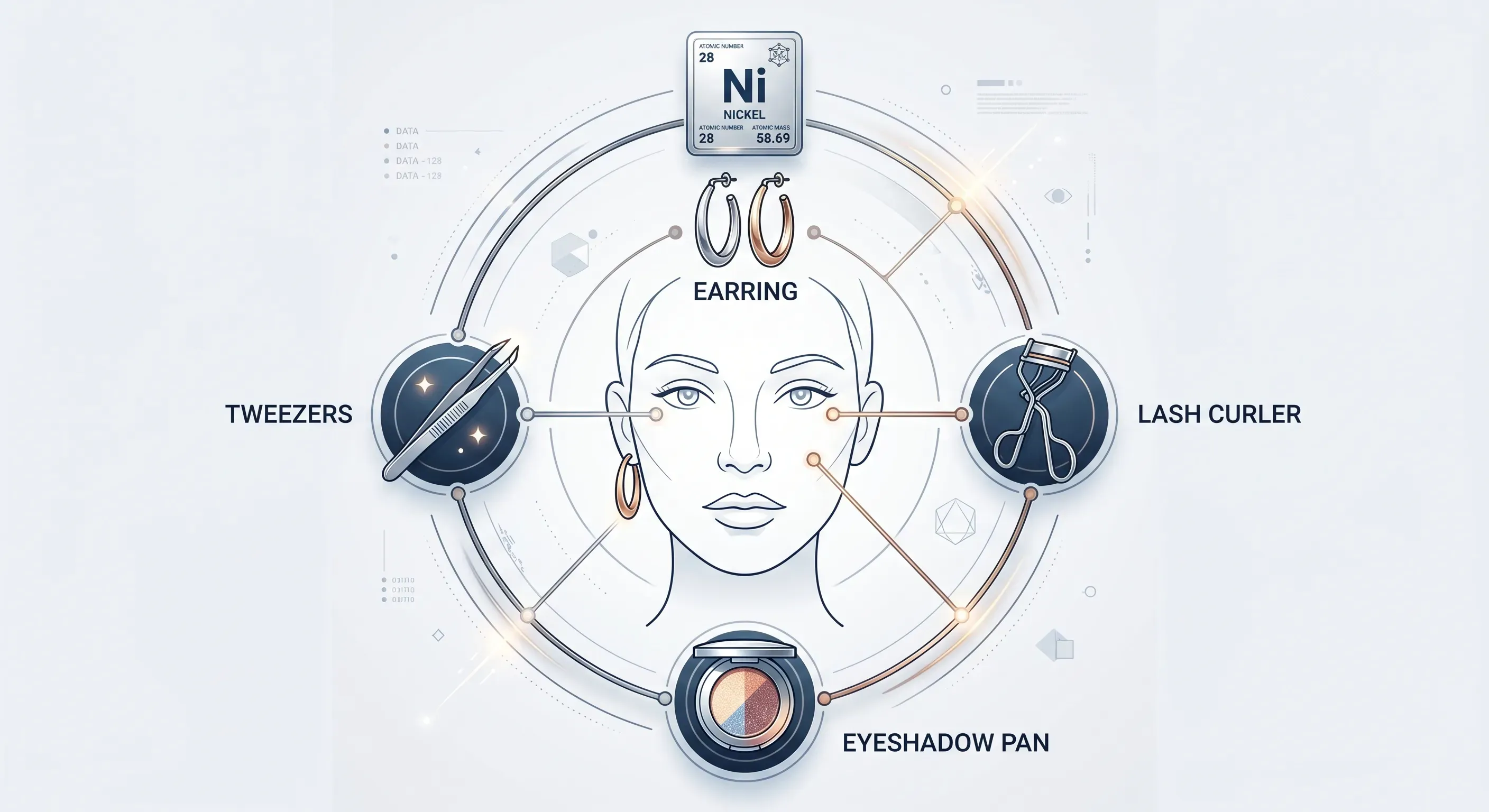
The second route needs no chemistry: tools. Eyelash curlers press bare metal onto the lid margin for seconds at a time, daily. Tweezers, sharpener blades, the metal pans in palettes, even spiral mascara wands — for a sensitized user with eyelid symptoms, the curler is often a better suspect than any powder. (Eyelid flares in general have a whole culprit list — see the eyelid dermatitis guide.)
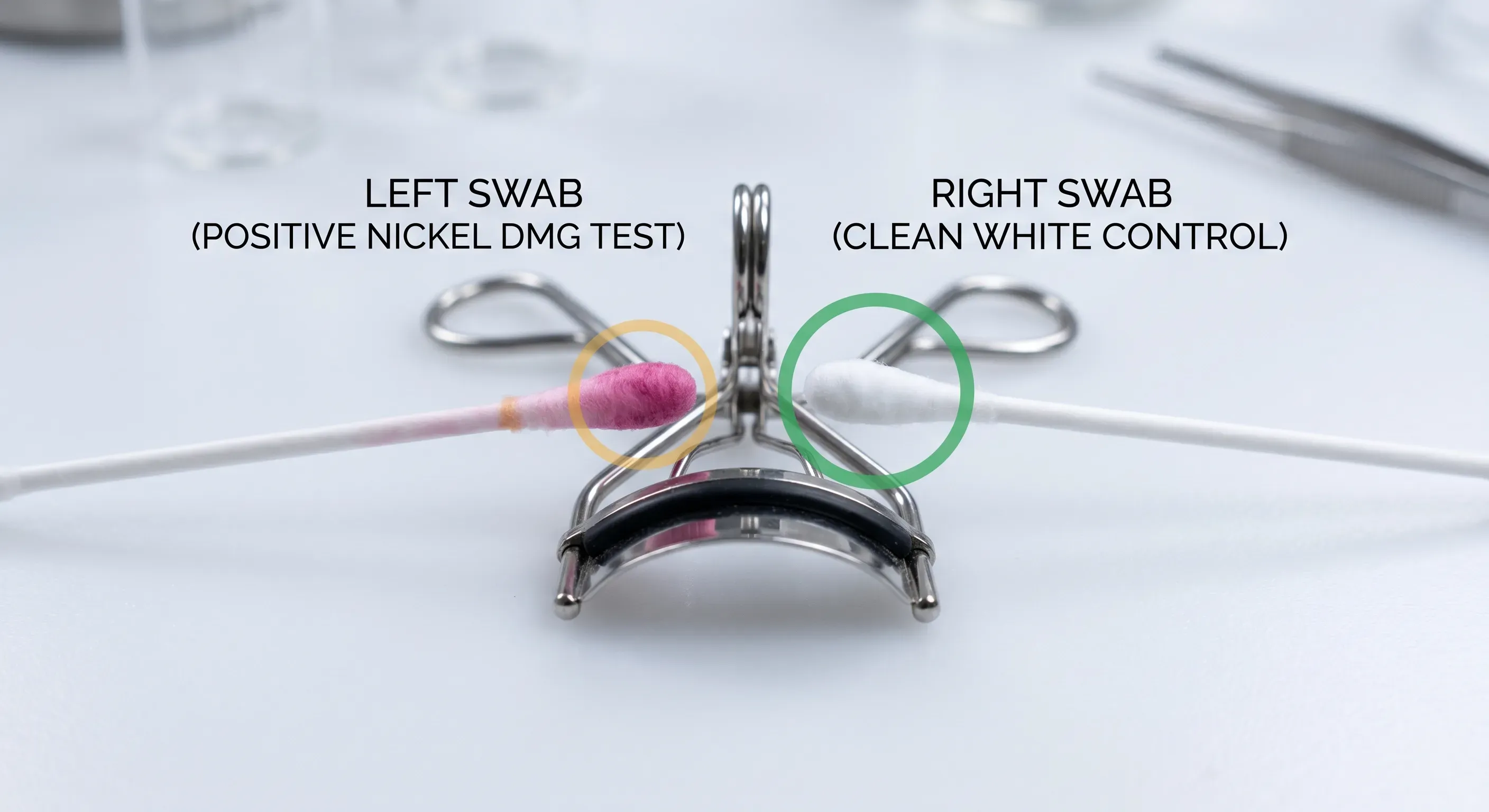
The classic nickel spot test — a cotton swab and DMG solution turning pink on nickel-releasing surfaces — works on your tools just like on jewelry. Test kits are inexpensive, and curlers, tweezers, and glasses frames are exactly the right targets. Powders and creams are beyond it (trace levels are too low for a swab), which is where batch-tested brands come in.
Who Actually Needs to Act
Nickel sensitization is common; cosmetic-level nickel reactions are the smaller subset. The strategy below earns its effort if you match one of these:
- Unexplained eyelid or lip dermatitis plus a history of jewelry reactions.
- A strong (++/+++) nickel patch test — dose thresholds drop as sensitization deepens.
- Flares that track specific palettes or shades, especially metallics and earth tones.
- Dyshidrotic hand eczema that your dermatologist links to nickel — total exposure (including dietary) sometimes matters at this tier.
The Low-Nickel Makeup Strategy
Since labels can't help, dose reduction does the work:
- Audit shades, not brands first. Park the dark metallics and forest greens for a month; lighter, less pigment-dense shades carry less metal.
- Swap the curler for a nickel-free/coated one (or test yours with DMG), and prefer plastic-handled, coated-tip tools.
- Look for "nickel tested" lines if you're strongly sensitized — a real, assayed claim common in Italian pharmacy brands.
- Mind long-wear lip products if your lips are the symptom site; pigment load and wear time both raise dose.
- Keep the rest of your routine allergen-quiet — fragrance- and MI-free — so your lids aren't fighting two wars at once. Scan your products for the listed allergens; nickel may be invisible to labels, but its frequent co-conspirators aren't.
FAQ
Can I be allergic to my eyeshadow but fine with the same brand's lipstick?
Easily. Nickel content varies pigment by pigment and batch by batch — two products, even two shades of one product, can sit on opposite sides of your personal threshold. This shade-level inconsistency is itself a clue pointing toward pigment contaminants rather than a listed ingredient.
Does titanium dioxide or zinc oxide contain nickel?
They can carry traces like any mineral, but surveys generally find white pigments markedly cleaner than iron oxides — another reason light shades are the safer end of the palette. (Titanium dioxide and zinc oxide have their own profiles.)
Is there a connection to my diet?
For most nickel-allergic people, no action needed. A minority with severe, widespread symptoms (especially dyshidrotic hand eczema) are trialed on low-nickel diets by their dermatologist — cocoa, nuts, legumes, oats, and canned food are the usual dietary heavyweights. That's a supervised step, not a default.
Related Reading
- Nickel — the quick-reference ingredient page
- Why Are My Eyelids Red? The Makeup & Skincare Culprits
- Cross-Reactors: The Hidden Allergens You Also Need to Avoid
- Patch Test Panels Explained

The Cross-Reactor Map
Allergic to one ingredient? See the relatives that may trigger you too.