What are sulfates?
Sulfates are cleansing agents (surfactants). The two most common are:
- SLS: Sodium Lauryl Sulfate
- SLES: Sodium Laureth Sulfate
They create lots of foam and remove oil effectively — which is why they feel “super clean”.
Most sulfate problems are irritation, not a true allergy. But irritation can still trigger eczema/rosacea flares and make sensitive skin worse.
Quick label check (what to look for)
Look for these names (often early in the ingredient list):
- Sodium Lauryl Sulfate (SLS)
- Sodium Laureth Sulfate (SLES)
- Sodium Coco Sulfate
- Ammonium Lauryl Sulfate
Why do sulfates irritate skin?
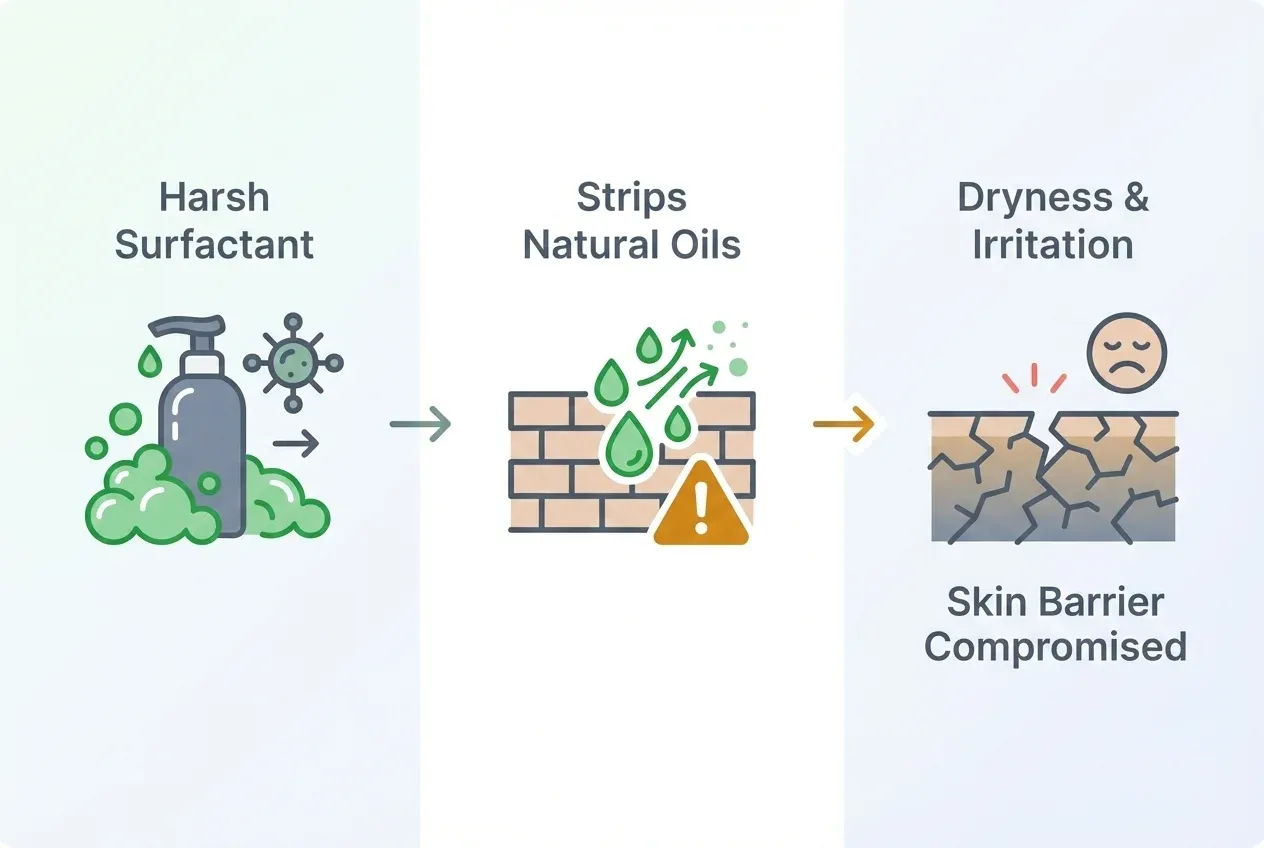
Sulfates can:
- Strip the skin/scalp’s protective oils
- Increase dryness and tightness
- Make the skin barrier more vulnerable to other irritants (including fragrance and preservatives)
Contact time matters
Irritation increases with both concentration and exposure time — leaving shampoo on scalp or letting foam sit on skin for long can make irritation worse.
If you don’t want to switch products yet: rinse sooner. Less time on skin/scalp often reduces irritation.
Where are sulfates most common?
- Shampoos (especially “clarifying” or “anti-dandruff” styles)
- Body washes and face cleansers
- Toothpaste (some formulas)
Why "big foam" sells (and why it misleads)
Sulfates dominate mainstream shampoos and washes for a marketing reason as much as a functional one: we've been trained to read rich, abundant foam as "working" and "clean." It's a powerful instinct — and it's exactly why gentle, low-foam cleansers feel underwhelming even when they're kinder to your skin. Sulfate-free options keep growing, but the claim alone isn't a guarantee: plenty of sulfate-free formulas lean on other strong surfactants or heavy fragrance, so it's still worth scanning the whole label rather than trusting the front.
Safer alternatives (ingredient patterns)
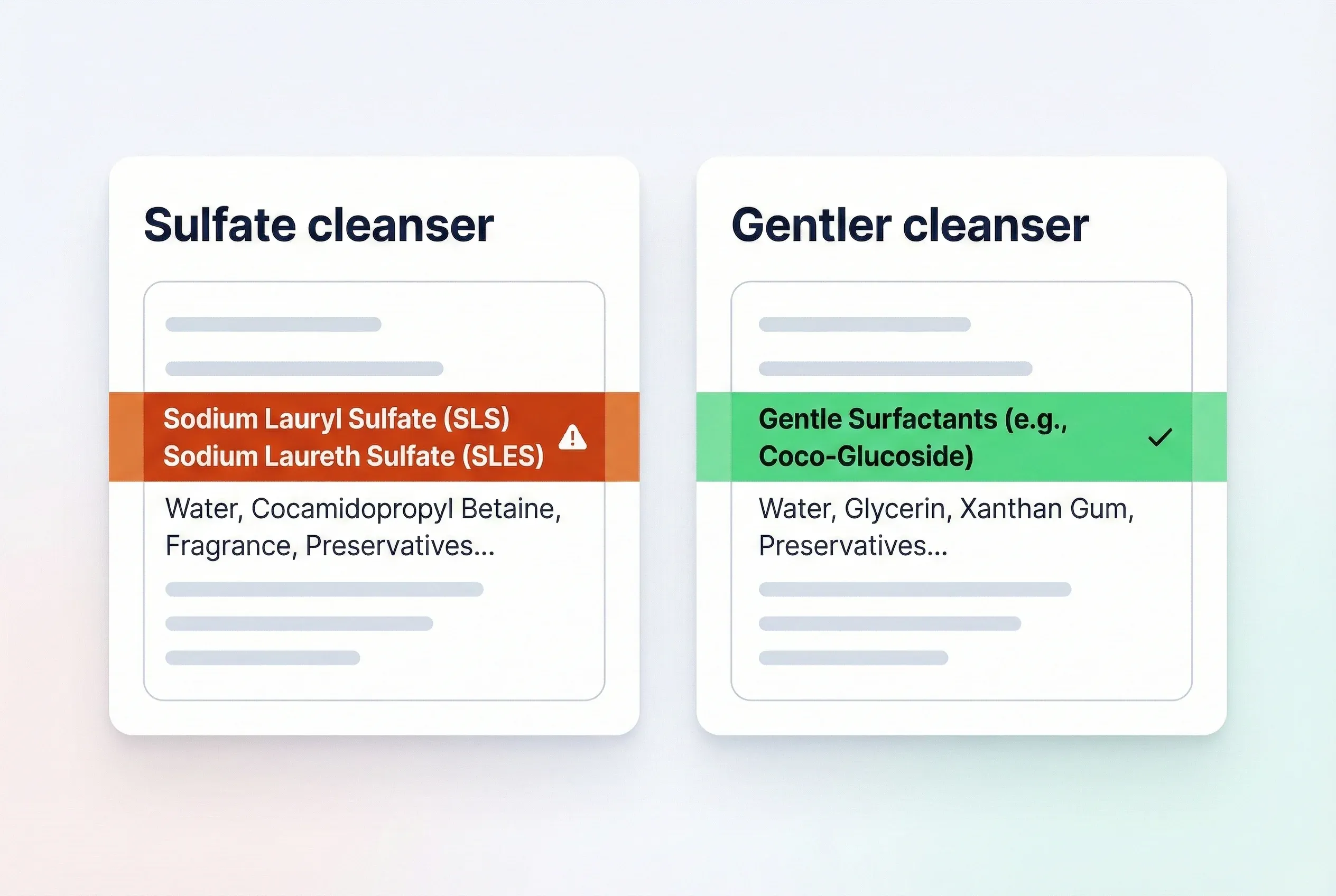
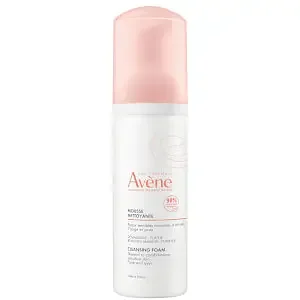
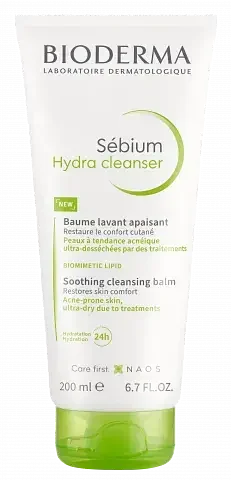
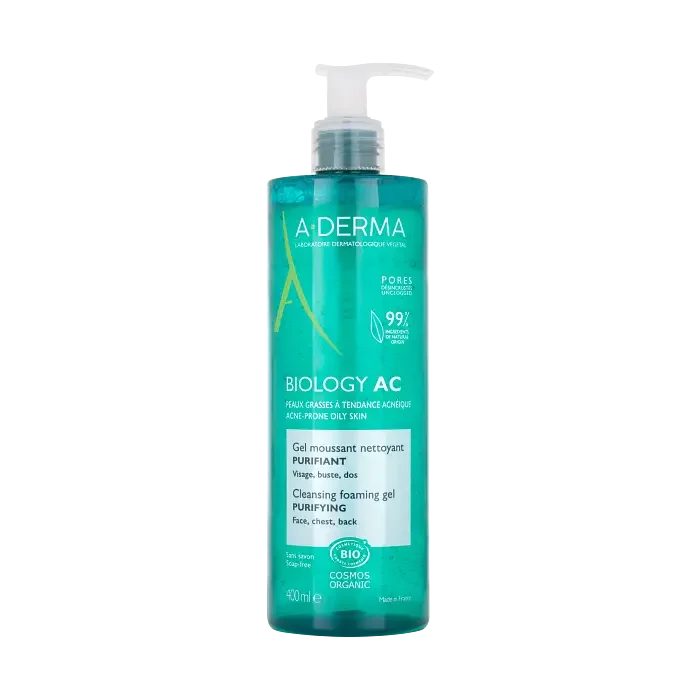
If you’re sensitive, look for cleansers using gentler surfactants like:
- Cocamidopropyl Betaine (note: some people react to it, but many tolerate it)
- Decyl Glucoside
- Sodium Cocoyl Isethionate
- Sodium Lauroyl Sarcosinate
How sulfate irritation shows up in different places
Sulfates do not behave the same way on every body part. The pattern often tells you where to investigate first:
Scalp
- dryness a day or two after washing
- itching along the hairline
- shampoo that feels "refreshing" but leaves the scalp tight
Face
- post-cleanser tightness
- redness around the nose and mouth
- stinging when you apply moisturizer afterward
Body
- shin or arm dryness after showering
- itch that gets worse in winter
- feeling clean immediately after showering, then dry 30 minutes later
Mouth
Some people react to SLS in toothpaste with mouth irritation, canker sores, or a raw feeling on the lips and corners of the mouth.
Why sulfates feel satisfying even when they are too harsh
Many people stick with irritating cleansers because the immediate user experience feels convincing:
- lots of foam
- squeaky-clean finish
- "deep cleansing" sensation
- instant oil removal
The problem is that these are not always signs of a healthy cleanse. For people with eczema, rosacea, or a dry scalp, that stripped feeling often predicts trouble later in the day.
A better way to trial a gentler cleanser
Do not swap your entire bathroom shelf at once. Try this:
- Replace only one product first: facial cleanser, shampoo, or body wash.
- Use it consistently for 10-14 days.
- Keep fragrance and actives as stable as possible so you are only testing the cleanser.
- Track whether tightness, itching, or flaking improves.
If symptoms improve, you learned something useful without creating confusion.
When "sulfate-free" is not enough
A sulfate-free label is a decent filter, but it is not a guarantee of comfort. A sulfate-free cleanser can still be harsh if it contains:
- strong fragrance or essential oils
- too many acids or exfoliating actives
- drying alcohols
- another surfactant your skin personally dislikes
This is why it helps to scan the whole label rather than chasing a single claim.
Who is most likely to benefit from avoiding sulfates?
The biggest winners are usually people with:
- atopic dermatitis or very dry skin
- rosacea or easy facial stinging
- curly or coily hair that needs more moisture retention
- scalp dermatitis
- frequent hand washing that already weakens the barrier
If your skin is resilient and oily, sulfates may not be a problem at all. Context matters more than internet rules.
A practical scalp trial plan
If you suspect shampoo is the issue, test one gentler wash product for 2 weeks. Do not change your hair oil, conditioner, leave-ins, and styling products on the same day unless they are obvious triggers too. Small, clean experiments teach you more than dramatic bathroom overhauls.
Bottom line
Sulfates are best thought of as a tolerance question, not a morality question. If your scalp or skin keeps feeling stripped, reducing harsh cleansers is one of the simplest high-value experiments you can run.
A sign you found the right cleanser
The right cleanser usually does not feel dramatic. Your skin should feel clean, but not squeaky, tight, itchy, or desperate for moisturizer the moment you dry off.
What to compare on the label
When you compare a harsh cleanser with a gentler one, notice:
- which surfactant appears first
- whether fragrance is also present
- whether the formula contains many exfoliating or cooling ingredients
- whether the product is marketed around "deep clean" or "maximum freshness"
Often it is the whole cleansing style, not just one sulfate, that your skin is reacting to.
That is why many people improve not when they chase one banned ingredient, but when they move toward a calmer, less aggressive cleansing pattern overall.
Less foam and less drama often means a better outcome for a stressed barrier.
That is not just a comfort issue; it can be the difference between a cleanser that supports the barrier and one that keeps provoking it.
For sensitive skin, gentleness is often a performance metric, not a compromise.
If your cleanser leaves the barrier calmer, the rest of the routine usually performs better too.
That benefit tends to show up quickly. Often within days, not months. Fast feedback makes cleanser trials especially useful. That speed helps people learn what their barrier actually tolerates. It also makes switching feel less risky. That confidence matters. It helps people stick with gentler routines long enough to learn.
FAQ
Are sulfates dangerous?
Not in the way consumers often mean by "dangerous." They are mainly an irritation issue. The question is not whether they are universally toxic, but whether they are too harsh for your barrier.
Why did my scalp improve when I switched shampoos?
It may be the sulfate reduction, but it could also be less fragrance, fewer actives, or shorter contact time. Product changes often fix more than one problem at once.
Can I still use a sulfate shampoo occasionally?
Many people can. For example, someone with an oily scalp might use a stronger clarifying shampoo infrequently and a gentler cleanser the rest of the time. If you flare every time you use it, that experiment has already answered the question.
Related Ingredient Pages
Want to learn more about specific ingredients? Browse our detailed guides:
- Sodium Lauryl Sulfate (SLS) — harshest sulfate, common irritant
- Sodium Laureth Sulfate (SLES) — milder than SLS, still drying
- Cocamidopropyl Betaine (CAPB) — gentler surfactant alternative