The "natural = safe" fallacy
Essential oils are marketed as natural, gentle alternatives to synthetic chemicals. But here's what many people don't realize: essential oils are highly concentrated plant extracts that can contain dozens of individual chemicals, many of which are known allergens.
A single drop of essential oil can contain compounds equivalent to many cups of herbal tea. This concentration is what makes them potent — and potentially risky.
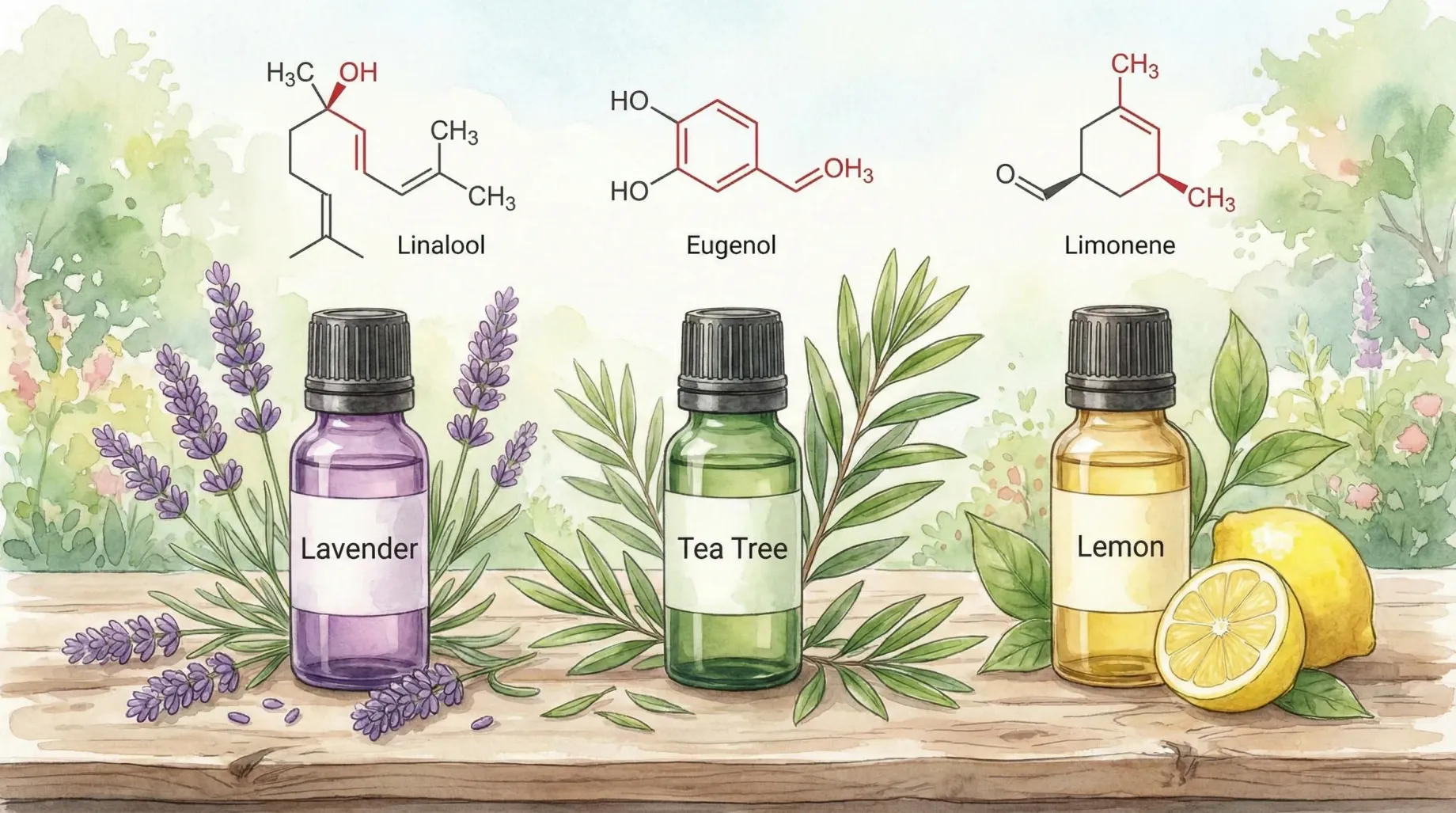
Linalool (found in lavender oil) and limonene (found in citrus oils) are among the top 10 most common cosmetic allergens in Europe. Both are natural.
Most problematic essential oils for skin
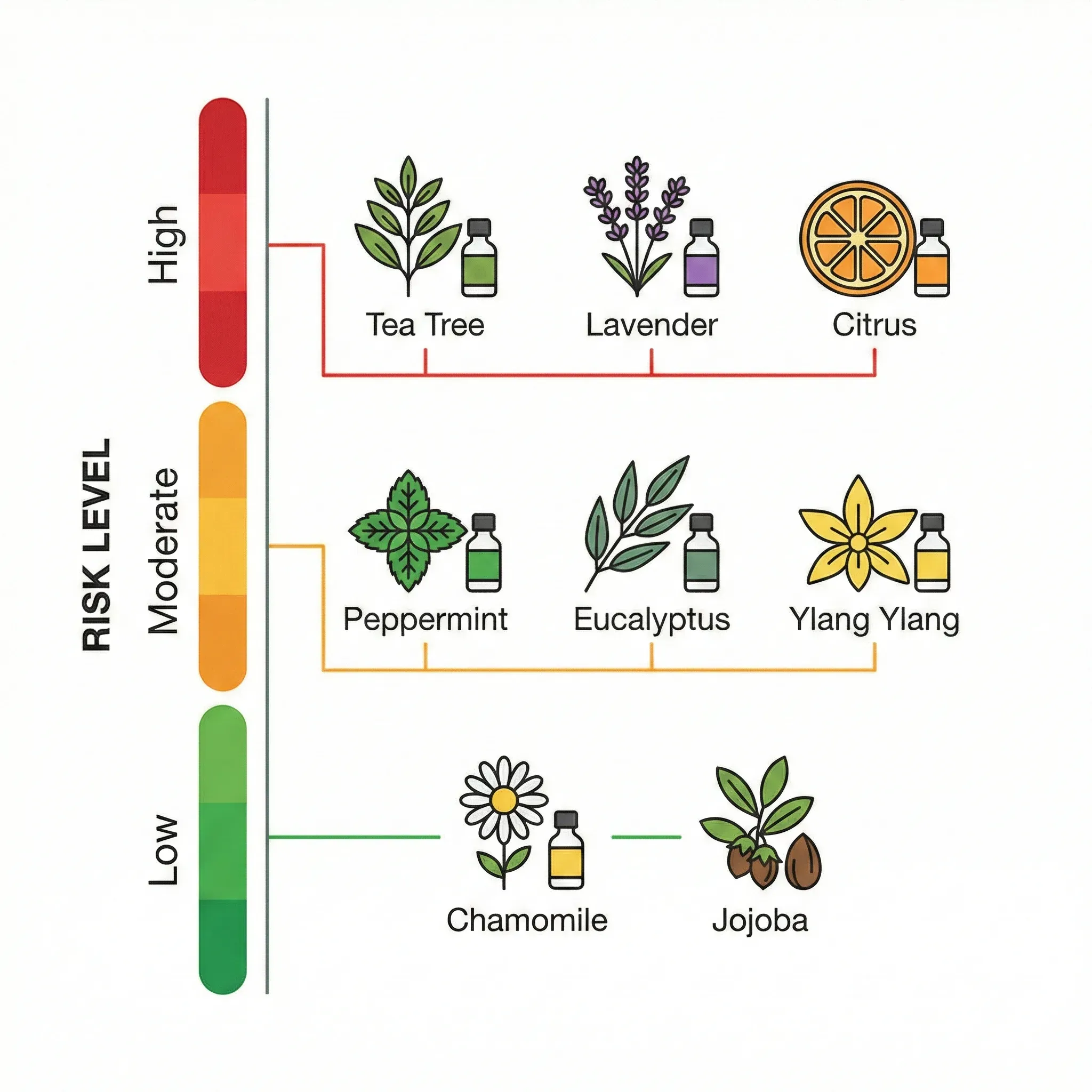
High risk
- Tea Tree Oil (Melaleuca) — popular for acne; oxidizes rapidly, becoming more allergenic over time
- Lavender Oil — contains linalool and linalyl acetate; common sensitizer
- Citrus Oils (lemon, bergamot, lime, orange) — phototoxic (can cause burns in sunlight) and contain limonene
- Cinnamon Oil — contains cinnamal, a strong sensitizer
- Clove Oil — contains eugenol, irritating at high concentrations
Moderate risk
- Peppermint Oil — menthol can irritate sensitive skin
- Eucalyptus Oil — can cause contact dermatitis
- Ylang Ylang — common fragrance allergen
- Rosemary Oil — sensitizer for some people
Lower risk (but not zero)
- Chamomile — generally gentler, but can cross-react with ragweed allergy
- Rosehip Seed Oil — more of a carrier oil, usually well-tolerated
- Jojoba Oil — technically a wax, low allergen potential
Why essential oils become more dangerous over time
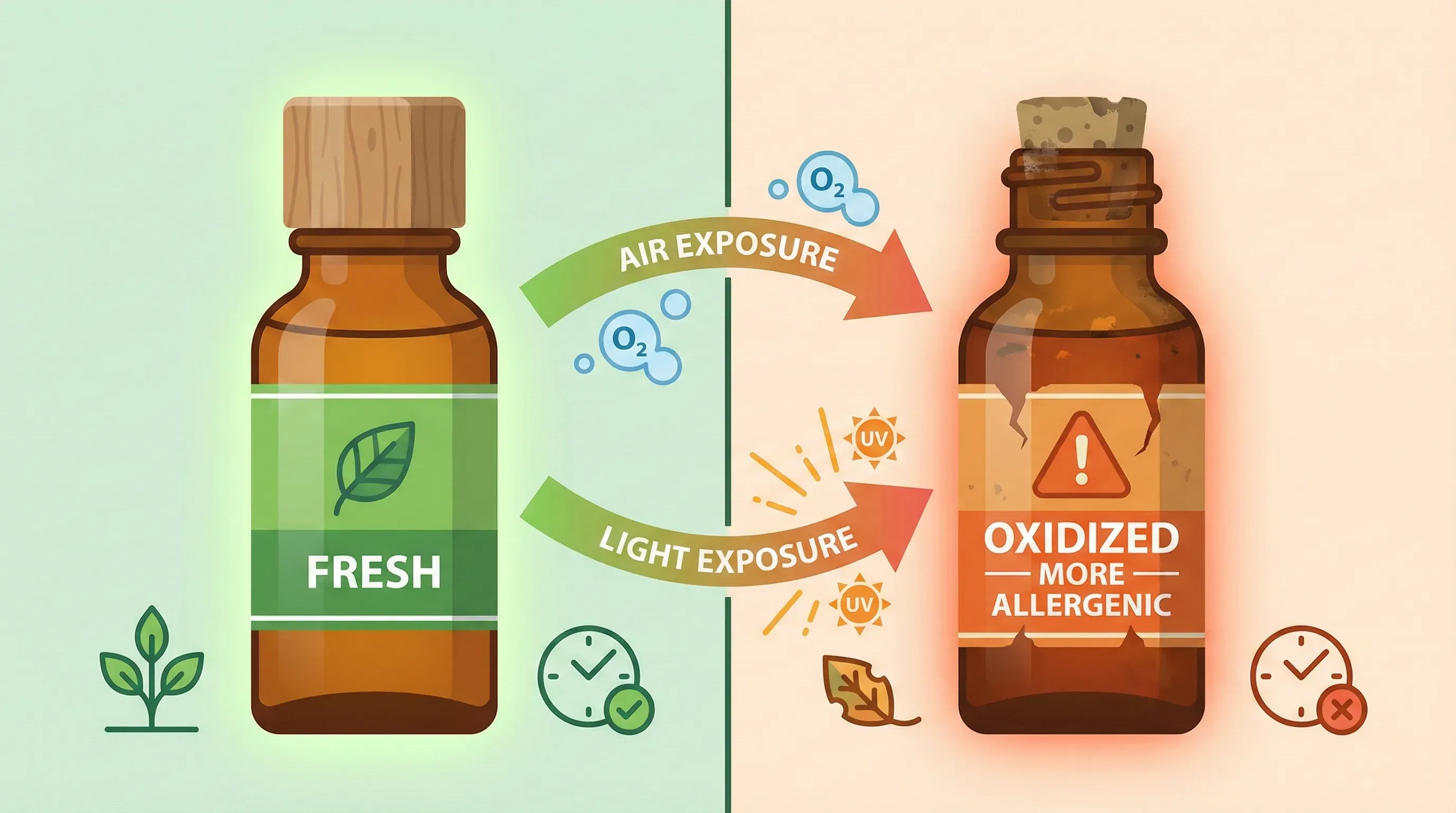
Many essential oils oxidize when exposed to air, light, and heat. The oxidation products are often more allergenic than the original oil.
This is well-documented for:
- Tea tree oil — oxidized tea tree oil is a much stronger sensitizer than fresh
- Lavender oil — linalool oxidizes to linalool hydroperoxides (potent allergens)
- Citrus oils — limonene oxidizes to limonene hydroperoxides
Practical implication: An old bottle of essential oil is more likely to cause reactions than a fresh one. Products containing essential oils may become more irritating as they age.
DIY and undiluted use is where it really goes wrong
Most serious essential-oil reactions don't come from a carefully formulated product — they come from home use that skips the safety margins a formulator would build in:
- Undiluted application — the single most common mistake; neat essential oil on skin is a high-dose exposure most barriers can't handle
- Lemon (and other citrus) juice or oil on skin — phototoxic: it can cause burns and lasting dark patches once you go into sunlight
- Turmeric and other "kitchen" actives — genuinely cause contact dermatitis in some people, despite the wholesome reputation
- Botanical oils like neem — popular and useful, but irritating at the concentrations DIY recipes often use
- Blending oils by guesswork — without knowing safe concentrations, it's easy to stack several allergens into one face mask
If you must use essential oils, most experts recommend no more than 1-2% dilution in a carrier oil for facial use. But even diluted oils can cause reactions in sensitized individuals.
How to protect yourself
- Don't assume natural = safe — evaluate essential oils the same way you'd evaluate synthetic ingredients
- Patch test — especially important for concentrated natural products
- Check for oxidation — discard essential oils that smell "off" or have been open for over 6 months
- Avoid citrus oils before sun exposure — bergamot, lemon, lime, and orange oils are phototoxic
- Watch for cumulative sensitization — you may tolerate an oil for months before developing an allergy
- Scan the full ingredient list — natural products often contain multiple essential oils
Use AllerNote to scan natural and Ayurvedic product labels. Our AI identifies individual essential oil components and flags known sensitizers, even when they're listed by botanical names.
How labels hide essential oils
A product does not always say "essential oil blend" in a clear way. You may see:
- the botanical name only, such as
Lavandula Angustifolia Oil - "natural fragrance" without listing all scent components
- a long list of plant extracts that function mostly as fragrance
- a wellness story on the front and a fragrance-heavy INCI list on the back
This is one reason natural products can feel deceptive. The marketing language sounds gentle, while the chemistry is still doing the same job as conventional fragrance.
Phototoxic vs irritant vs allergic reactions
These reactions are easy to confuse:
| Reaction type | What it often feels like |
|---|---|
| Irritant | fast sting or burn soon after use |
| Allergic | delayed itch, redness, eczema, repeated flares |
| Phototoxic | burn-like reaction or dark patch after sun exposure |
If you use citrus oils during the day and then get a strange burn or mark, phototoxicity should be on the list of possibilities.
When essential oils are most likely to cause trouble
Risk rises when:
- they are used on the face or eyelids
- the formula is leave-on rather than rinse-off
- the skin barrier is already damaged
- the oil is old and oxidized
- multiple essential oils appear in one formula
- the product is DIY, so concentration control is poor
That is why many sensitive-skin dermatology routines remove them entirely rather than trying to optimize around them.
A lower-risk way to think about scent in skincare
If your goal is healthy skin, not spa fragrance, a useful rule is:
- let perfume be perfume
- let skincare be skincare
In other words, keep intentional fragrance out of treatment products, moisturizers, sunscreens, and barrier-repair steps. That single decision lowers a surprising amount of risk.
If you want to keep one scented product
Some people are not trying to eliminate all fragrance from life. If that is you, keep scent in lower-contact categories instead of high-contact skincare. It is usually safer to reserve fragrance for a perfume on clothing than to put essential oils inside your moisturizer, sunscreen, acne treatment, and lip care all at once.
Bottom line
Essential oils are not automatically bad, but they are usually optional. For reactive skin, optional irritants and optional allergens are often the easiest things to remove first.
That is why many sensitive-skin routines improve not when they become more advanced, but when they become less scented.
FAQ
Is tea tree oil safe for acne?
Tea tree oil can help with acne, but it's also a common sensitizer — especially when oxidized. If you use it, buy fresh, keep it sealed and dark, and never apply undiluted.
Can I be allergic to lavender?
Yes. Lavender contains linalool and linalyl acetate, both recognized allergens. Lavender allergy is increasingly common.
Are carrier oils (coconut, jojoba) also risky?
Carrier oils are generally much safer than essential oils because they're less concentrated. However, coconut oil can be comedogenic (clog pores), and some people react to specific carrier oils.
Browse fragrance-free moisturizers in the catalog
If you are avoiding essential oils in leave-on products (especially moisturizers), use the AllerNote skincare product catalog: open a brand, choose the Moisturizer category when available, then read the full INCI list and formula flags on each product page before you buy. That is the most reliable way to confirm a formula is free of lavender, tea tree, citrus oils, and other botanical extracts you are steering clear of.
Related Ingredient Pages
Want to learn more about specific ingredients? Browse our detailed guides:
- Tea Tree Oil — oxidizes, becomes more allergenic over time
- Lavender Oil — contains linalool, common sensitizer
- Eugenol — found in clove oil, strong sensitizer
- Linalool — top fragrance allergen, oxidizes