
Granactive Retinoid (HPR)
A next-generation retinoid ester that binds receptors directly — retinoid benefits with notably less irritation
INCIHydroxypinacolone Retinoate
- Category
- Active
- Risk level
- low
- What it is
- A retinoid ester (HPR) that binds retinoid receptors directly — no multi-step conversion needed
- Trade name
- Sold as "Granactive Retinoid," popularised in The Ordinary formulations
- Tolerability
- Low irritation and low allergy; often tolerated by people who can't use retinol
- Caveat
- Newer, so long-term data are thinner; still a retinoid (avoid in pregnancy)
Look for these names on ingredient lists
This ingredient may appear under any of these names:
Commonly found in
Possible reactions
- Notably less irritation than retinol
- Rare dryness or peeling
- Occasional mild redness in sensitive users
- Milder sun sensitivity than retinol (still use SPF)
- Not recommended in pregnancy
Top picks with Granactive Retinoid (HPR)
Highly rated products that feature Granactive Retinoid (HPR) in their ingredient list.
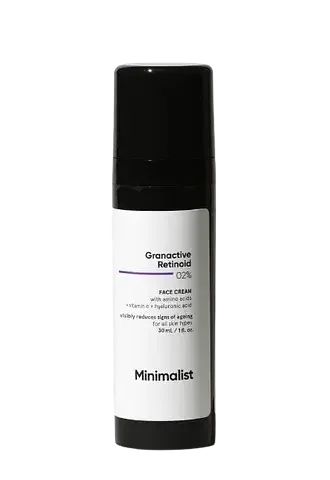
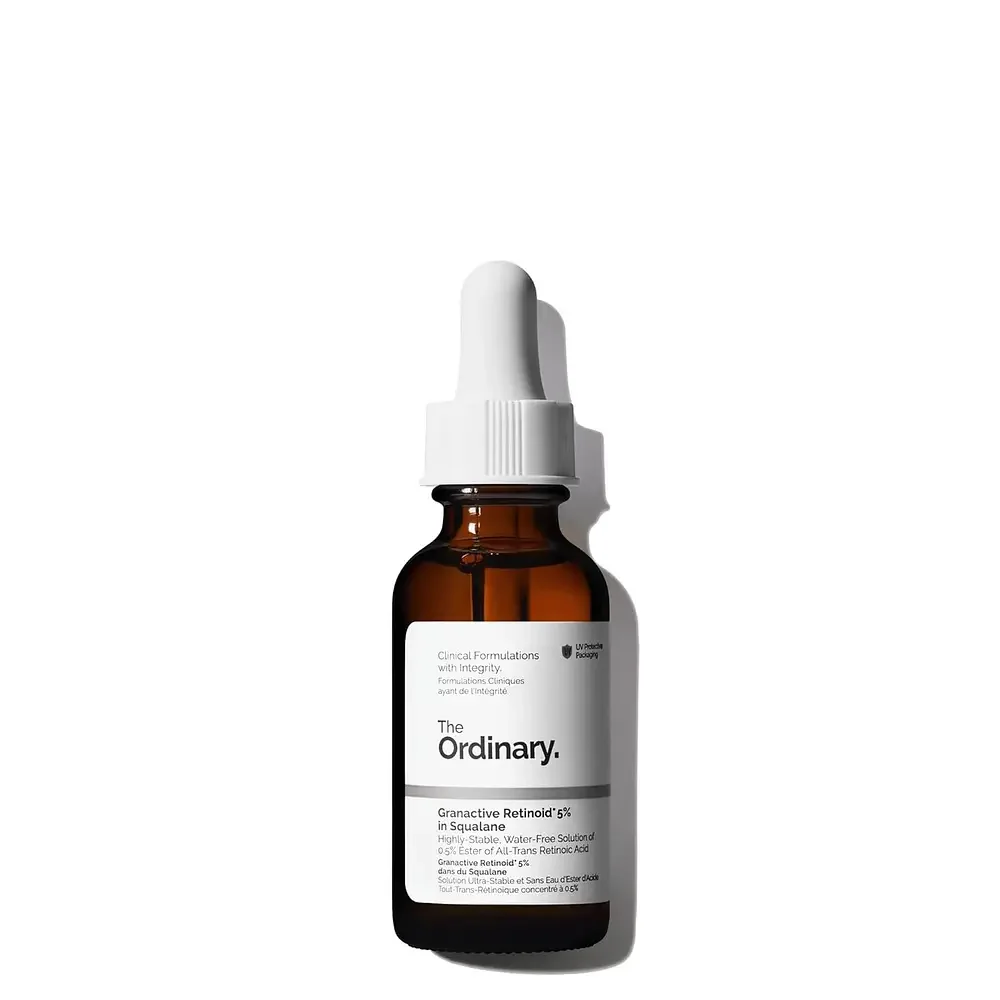
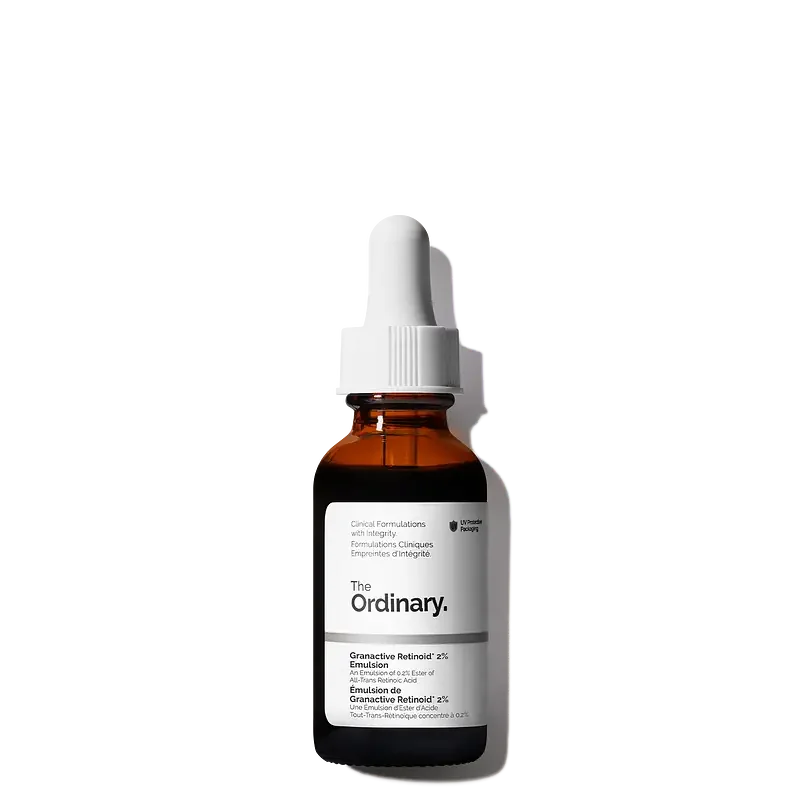
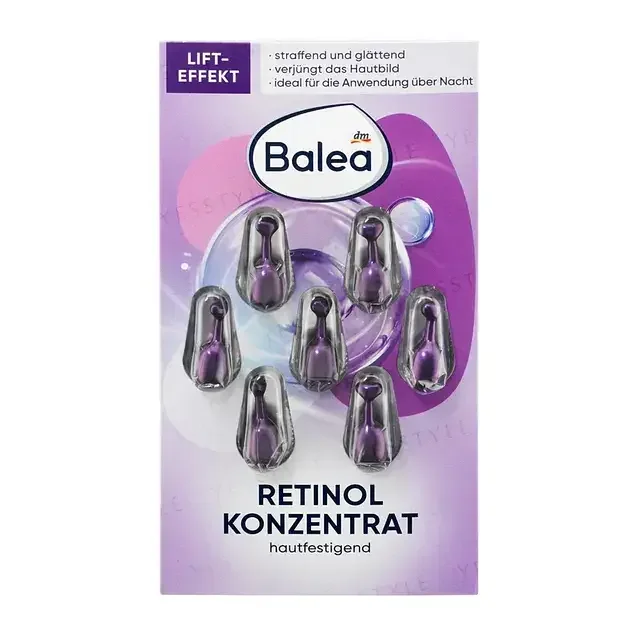
Always scan the actual label before use — formulations change.
What is Granactive Retinoid?
Granactive Retinoid is the trade name for hydroxypinacolone retinoate (HPR), a newer retinoid ester designed to give retinoid benefits without the irritation that limits retinol. Unlike retinol — which must convert through two enzymatic steps to become active retinoic acid — HPR binds retinoid receptors directly, so it delivers retinoid signalling without producing the inflammatory intermediates behind retinol's peeling and dryness.
It became widely accessible through affordable formulations (notably The Ordinary's 2% emulsion and 5% in squalane), and both early studies and user reports show solid retinoid-like effects on lines, tone, and pigment with minimal irritation.
Why it's gentle (and the honest caveat)
Two reasons for the gentleness: direct receptor binding (no wasted, irritating intermediates) and gentle oil/emulsion bases that avoid the pH/formulation irritation common to retinol products. It's rated safe at cosmetic concentrations, contact allergy is rare, and many people who couldn't tolerate retinol do well on it.
The honest caveat is evidence maturity: HPR is newer, so the long-term clinical literature is thinner than retinol's decades of data. And it remains a retinoid — so:
- Pregnancy: avoid, same as retinol/tretinoin.
- Sun sensitivity: milder than retinol, but still wear daily SPF.
- Patience: expect 8–12 weeks for visible change.
How to use it well
- Start with the 2% strength — the 5% is stronger but rarely necessary.
- Apply at night (despite good stability).
- Moisturise on top — a ceramide cream supports the barrier even though HPR is gentle.
- Often daily-tolerable from the start, unlike retinol.
- Keep wearing sunscreen — still a retinoid.
Alternatives
- Most proven results: retinol or prescription tretinoin.
- Stronger but gentle: retinaldehyde.
- Milder still: retinyl palmitate.
- Pregnancy: bakuchiol.
The bottom line
Granactive Retinoid (HPR) is a genuinely gentler way to get retinoid signalling — great for sensitive skin and retinol "rejectors" — with the only real asterisks being a younger evidence base and the universal retinoid rule: not in pregnancy.
Was this article helpful?
One tap tells us what to write more of. No account needed.
Is this ingredient in your products?
Scan any cosmetic product to check for Granactive Retinoid (HPR) and 30+ other allergens instantly.