What Happens After a Patch Test?
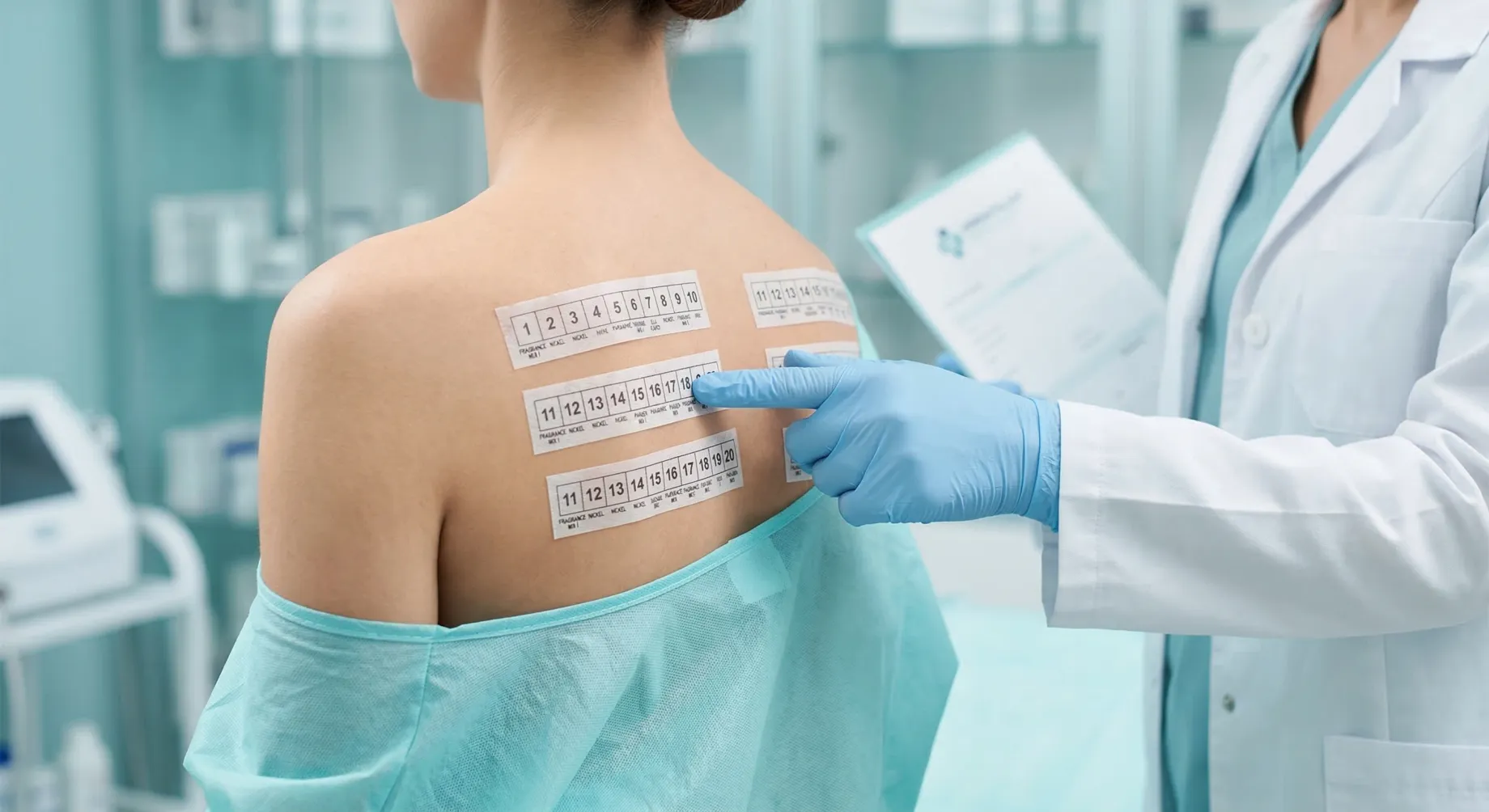
Your dermatologist just told you that you're allergic to nickel, fragrance mix, methylisothiazolinone, or some other substance with an unpronounceable name. They may have handed you a printed sheet listing the allergens you tested positive for.
Now comes the hard part: translating those clinical results into real-life product decisions.
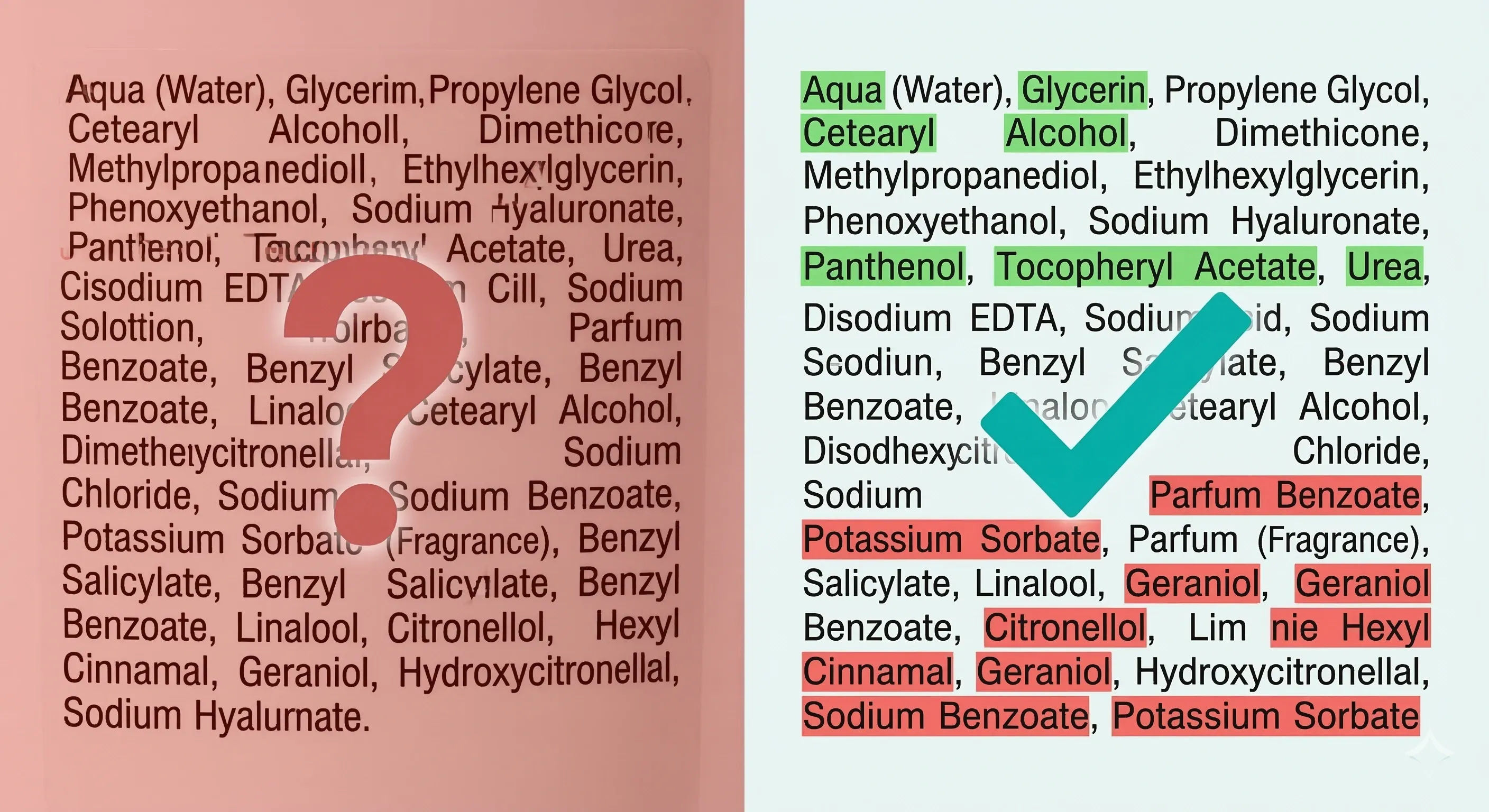
The problem is that each allergen can appear under dozens of different names on ingredient labels. Fragrance alone can be listed as "parfum," "fragrance," "aroma," or hidden behind hundreds of individual chemical names. Nickel won't appear on a cosmetic label at all — but it's present in many metal-containing products.
This guide walks you through exactly how to go from patch test results to a safe, practical shopping routine.
Understanding Your Results
Patch test results are typically graded on a scale:
| Grade | Meaning | What It Looks Like |
|---|---|---|
| - | Negative | No reaction |
| ?+ | Doubtful | Faint redness only |
| + | Weak positive | Redness, slight swelling |
| ++ | Strong positive | Redness, swelling, small blisters |
| +++ | Extreme positive | Intense redness, large blisters, spreading |
| IR | Irritant reaction | Not a true allergy — different management needed |
A weak positive (+) result needs clinical interpretation. Your dermatologist will help determine if it's clinically relevant based on your history, exposure patterns, and symptoms. Don't avoid ingredients based solely on a weak positive without discussing it with your doctor.
The 5 Most Common Patch Test Positives
These are the allergens US and EU patients most frequently test positive for:
1. Nickel Sulfate
Found in: Jewelry, belt buckles, zippers, phone cases, eyeshadow (as a contaminant), and some hair dyes. Also present in many foods.
On ingredient labels: Won't be listed directly. Look for "CI 77510" (iron blue, may contain nickel) or metal-containing pigments.
2. Fragrance Mix I & II
Found in: Almost all scented products — perfumes, lotions, cleansers, candles, laundry detergent.
On ingredient labels: "Parfum," "Fragrance," "Aroma," or specific chemicals like linalool, limonene, geraniol, eugenol, cinnamal, citronellol, coumarin.
3. Methylisothiazolinone (MI) / Methylchloroisothiazolinone (MCI)
Found in: Shampoos, conditioners, wet wipes, hand soaps, liquid detergents, cosmetics.
On ingredient labels: "Methylisothiazolinone," "MI," "MCI," "Kathon CG," "Neolone 950."
4. Cobalt Chloride
Found in: Blue pigments, some hair dyes, antiperspirants, vitamin B12 supplements, metals.
On ingredient labels: "CI 77346," "Cobalt Blue." Cross-reacts with nickel in many patients.
5. Balsam of Peru (Myroxylon pereirae)
Found in: Flavored foods, cola, chocolate, spices, citrus peel, fragranced products.
On ingredient labels: "Myroxylon pereirae," "Balsam Peru," "Peru Balsam." Indicates sensitivity to many natural fragrances and spices.
How to Shop Safely: Step-by-Step
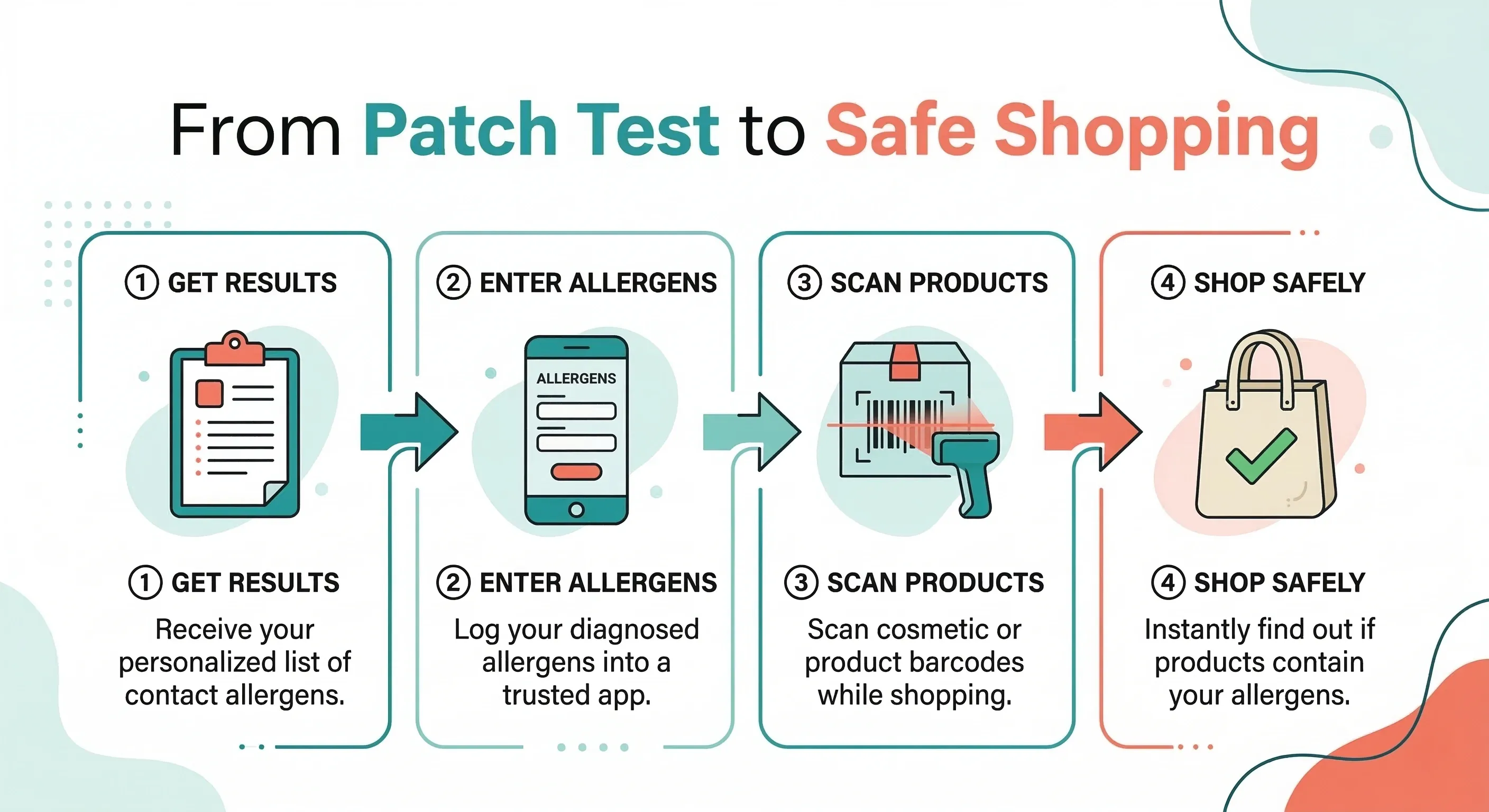
Step 1: Create Your Allergen Checklist
Write down every allergen from your patch test results along with ALL their synonyms. For example, if you're positive for MI:
- Methylisothiazolinone
- MI
- Neolone 950
- Microcare MT
- 2-Methyl-4-isothiazolin-3-one
This is where it gets overwhelming — most allergens have 5-15 different names.
Instead of memorizing dozens of chemical synonyms, add your allergens to your AllerNote profile once. Every product you scan will automatically be checked against all known names, synonyms, and derivatives of your triggers.
Step 2: Understand the CARD Database
The Contact Allergen Replacement Database (CARD) from Mayo Clinic is the gold standard resource. It lists products that are safe for specific allergen profiles. However:
- CARD is designed for dermatologists, not consumers
- It covers US products but the database requires clinical access
- You need to cross-reference your specific allergen combination
AllerNote functions as a consumer-friendly bridge to this same concept — scan any product and get instant results matched against your personal triggers.
Step 3: Scan Before You Buy
For every new product, before it goes in your cart:
- In-store: Point your phone camera at the ingredient list. Get results in 3 seconds.
- Online: Copy-paste the INCI list from the product page into the scanner.
- Gifted products: Scan before using — don't assume anything is safe.
Step 4: Build a Safe Routine
Once you've identified safe products, create a documented routine:
- Morning (AM): Cleanser → Moisturizer → Sunscreen → Makeup
- Evening (PM): Cleanser → Treatment → Moisturizer
Every step should be verified against your allergen profile. If you swap even one product, re-scan.
Step 5: Track Reactions
Even with careful avoidance, breakthrough reactions happen. Track:
- What product did you use?
- When did the reaction start?
- Where on your body?
- Severity (mild redness vs. blistering)
Over time, this data helps identify new sensitivities or hidden allergen exposures.
Special Situations
Cross-Reactivity
Some allergens cross-react, meaning sensitivity to one increases risk of reacting to related substances:
| If You're Positive For... | Also Watch Out For... |
|---|---|
| Nickel | Cobalt, palladium |
| Balsam of Peru | Fragrance mix, cinnamon, vanilla |
| Colophonium (rosin) | Modified rosin esters, abietic acid |
| PPD (hair dye) | Textile dyes, black rubber, some sunscreens (PABA) |
| MI/MCI | Other isothiazolinone preservatives |
Food-Cosmetic Cross-Reactivity
This is often overlooked: some contact allergens are also present in food or food-derived skincare:
- Nut allergies: Arachis hypogaea (peanut oil), prunus amygdalus (almond oil), and other nut oils appear in skincare
- Balsam of Peru: Cross-reacts with cinnamon, vanilla, tomatoes, citrus peels
- Nickel: Present in chocolate, oats, nuts, legumes — systemic exposure can flare skin
If you have food allergies, scan your skincare products too. Many cosmetics contain food-derived ingredients under their INCI names. AllerNote translates these chemical names so you can spot them instantly.
When to Go Back to Your Dermatologist
Schedule a follow-up if:
- You're still having reactions despite avoiding your known allergens
- You develop new symptoms in areas you haven't had issues before
- You're unsure about the clinical relevance of a weak positive result
- You need help finding safe products in a specific category (e.g., hair dye alternatives for PPD allergy)
FAQ
How long do patch test results last?
Contact allergies are typically lifelong. Once you're sensitized to a substance, your immune system will react to it indefinitely. However, the clinical relevance can change — some weak positives may not cause problems in practice.
Can I develop new allergies over time?
Yes. Contact sensitization can develop at any age with repeated exposure. This is why tracking reactions over time is important — a product that was safe for years can become a trigger.
Is "hypoallergenic" safe for me?
Not necessarily. "Hypoallergenic" is not regulated by the FDA. It means nothing specific about which allergens are absent. You must still check every ingredient list against your personal triggers.
What about "fragrance-free" products?
"Fragrance-free" means no added fragrance for scent purposes. However, products may still contain fragrant ingredients (like essential oils) for other functions. "Unscented" is even less reliable — it may contain masking fragrances. Always scan the full ingredient list.
Should I avoid ayurvedic/natural products?
Natural does not mean allergen-free. Ayurvedic ingredients like turmeric (haldi), neem oil, tea tree oil, and essential oils are common contact sensitizers. The benefit of scanning is that it checks everything regardless of whether it's "natural" or synthetic.